BEGIN:VCALENDAR
VERSION:2.0
PRODID:-//CiviCRM//NONSGML CiviEvent iCal//EN
X-WR-TIMEZONE:America/Chicago
METHOD:PUBLISH
BEGIN:VTIMEZONE
TZID:America/Chicago
BEGIN:DAYLIGHT
TZOFFSETFROM:-0500
TZOFFSETTO:-0500
TZNAME:CDT
DTSTART:20261008T150000
END:DAYLIGHT
END:VTIMEZONE
BEGIN:VEVENT
UID:CiviCRM_EventID_953_4648ad046ce9282d92c6599c5429c299@becker.wustl.edu
SUMMARY:Beyond open access: Rethinking how we make science
meaningful and trustworthy
X-ALT-DESC;FMTTYPE=text/html:\n
\n
\n
\n
\n \n
\n <
p style="color:#f37d21\;font-size:22px\;">
Keynote speaker
\n
\n Beyond open acces
s: Rethinking how we make science meaningful and t
rustworthy\n
\n
\n
\n \n Pr
esented by Bernard Becker Medical Library\, Center
for Health & Science Communication at Becker Libr
ary and WashU Libraries\, in recognition of Intern
ational Open Access Week.
\n \n Making resea
rch publicly available\, once seen as an end goal\
, is now more like the starting point. As scientif
ic information moves through an increasingly compl
ex ecosystem of journals\, repositories\, AI tools
\, media\, and social platforms\, we need to rethi
nk what it means for research to be truly accessib
le. This talk will explore the next chapter of sch
olarly communication: how we can build channels th
at add meaning and context to research\, embed str
onger signals of trustworthiness in the scholarly
record\, and empower researchers to help shape how
their work is understood and used beyond the trad
itional paper. Drawing on efforts underway at Scie
nce to rethink how research is communicated and co
ntextualized\, the talk will consider how publishe
rs and researchers can work together to make scien
tific findings more discoverable\, understandable\
, and trustworthy in a rapidly changing informatio
n environment.
\n \n 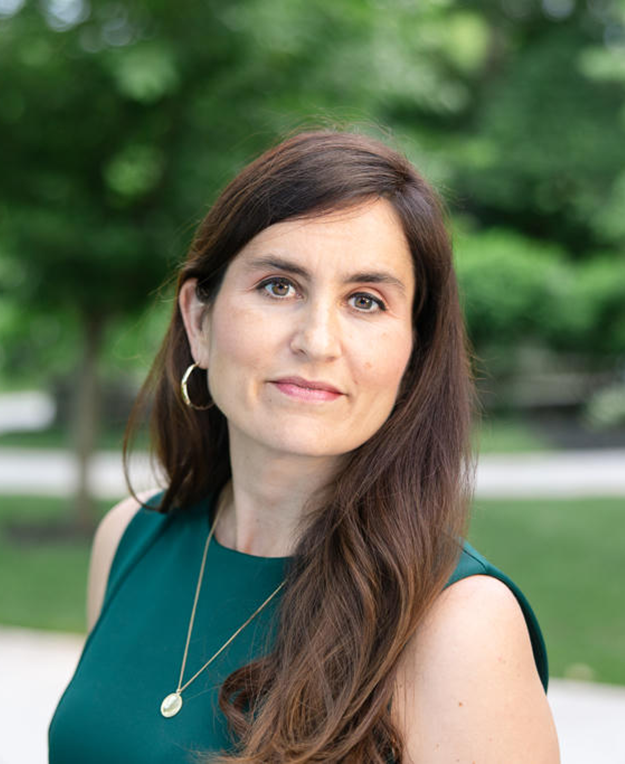 Meagan Phelan
\n Communications Director\, Science
Journals & Publishing at American Associatio
n for the Advancement of Science (AAAS)
\n \n <
div style="clear:both\;"> \n \n Meagan is
the Communications Director for Science Journals
& Publishing\, where she oversees efforts to suppo
rt accurate communication of Science family journa
l content. In this role\, she’s been able to help
innovate how science communication is done in resp
onse to key issues\, including science integrity a
nd public access. Prior to joining AAAS in 2013\,
she served as a senior writer at a catastrophe ris
k modeling company in Boston\, where she worked wi
th more than 65 Ph.D.-level scientists and enginee
rs. Previously\, she was a senior writer and edito
r at the Memorial Sloan-Kettering Cancer Center. M
eagan holds a Bachelor's degree in Biology and Spa
nish from Gettysburg College\, and a Master's degr
ee in Science Writing from The Johns Hopkins Unive
rsity. In 2008\, Meagan received a Fulbright Schol
arship to work with researchers at the University
of Valencia in Spain as they studied the cause of
morbillivirus resurgence among dolphins in the Med
iterranean.
DESCRIPTION:\n \n \n \n \n \n \n \n \n \n Keynote speaker\n \n
\n \n Beyond open access: Rethinking how we make
science meaningful and trustworthy\n \n \n \n \n \
n \n \n \n \n \n \n \n Presented by Bernard Becke
r Medical Library\, Center for Health & Science Co
mmunication at Becker Library and WashU Libraries\
, in recognition of International Open Access Week
.\n \n \n \n Making research publicly available\,
once seen as an end goal\, is now more like the st
arting point. As scientific information moves thro
ugh an increasingly complex ecosystem of journals\
, repositories\, AI tools\, media\, and social pla
tforms\, we need to rethink what it means for rese
arch to be truly accessible. This talk will explor
e the next chapter of scholarly communication: how
we can build channels that add meaning and contex
t to research\, embed stronger signals of trustwor
thiness in the scholarly record\, and empower rese
archers to help shape how their work is understood
and used beyond the traditional paper. Drawing on
efforts underway at Science to rethink how resear
ch is communicated and contextualized\, the talk w
ill consider how publishers and researchers can wo
rk together to make scientific findings more disco
verable\, understandable\, and trustworthy in a ra
pidly changing information environment.\n \n \n \n
Meagan Phelan\n \n Communications Director\, Scie
nce Journals & Publishing at American Association
for the Advancement of Science (AAAS)\n \n \n \n
\n \n \n Meagan is the Communications Director for
Science Journals & Publishing\, where she oversee
s efforts to support accurate communication of Sci
ence family journal content. In this role\, she’s
been able to help innovate how science communicati
on is done in response to key issues\, including s
cience integrity and public access. Prior to joini
ng AAAS in 2013\, she served as a senior writer at
a catastrophe risk modeling company in Boston\, w
here she worked with more than 65 Ph.D.-level scie
ntists and engineers. Previously\, she was a senio
r writer and editor at the Memorial Sloan-Ketterin
g Cancer Center. Meagan holds a Bachelor's degree
in Biology and Spanish from Gettysburg College\, a
nd a Master's degree in Science Writing from The J
ohns Hopkins University. In 2008\, Meagan received
a Fulbright Scholarship to work with researchers
at the University of Valencia in Spain as they stu
died the cause of morbillivirus resurgence among d
olphins in the Mediterranean.\n \n
CATEGORIES:Presentation/Lecture
CALSCALE:GREGORIAN
DTSTAMP;TZID=America/Chicago:20261008T150000
DTSTART;TZID=America/Chicago:20261008T150000
DTEND;TZID=America/Chicago:20261008T160000
LOCATION:Moore Auditorium\n WashU Medical Campus\n
URL:https://becker.wustl.edu/civicrm/event/info/?reset=1&id=953
END:VEVENT
END:VCALENDAR