\n Alex Bradley
\n Associate Professor of Earth\, Environmental\, and Planetary Sciences< br />\n Co-director of the Geospatial Research Ini tiative
St. Lou is residents face extreme urban heat\, air polluti on\, flooding\, and unequal access to green space\ , all of which affect community safety and physica l and mental health. This panel brings together lo cal researchers and community leaders to explore h ow geospatial science can address challenges in pu blic health\, environmental hazards\, and biodiver sity across the region. Panelists will reflect on partnership opportunities\, share strategies for c ommunity-driven research\, and discuss turning dat a into action for neighborhoods and ecosystems. Th e session aims to spark new collaborations and adv ance equitable\, place- based solutions for a heal thier\, more resilient St. Louis.
\n \nSpeakers:
\n Alex Bradley
\n Associate Professor
of Earth\, Environmental\, and Planetary Sciences<
br />\n Co-director of the Geospatial Research Ini
tiative
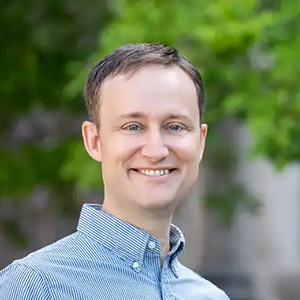 Nathan Jaco
bs
\n Professor Vice Provost for Artificial I
ntelligence (AI)
\n Co-director of the Geospa
tial Research Initiative
Nathan Jacobs develops l
earning-based computer vision and multimodal AI me
thods for understanding large-scale visual data\,
with applications in geospatial and scientific dom
ain.
\n
\n Alex Bradley studies the coe
volution of life and the Earth. He is interested i
n using techniques from both geochemistry and biol
ogy to better understand the history of life and h
ow biogeochemical cycles have changed through Eart
h history.
Registration is required. P lease register by 12 p.m. CT on Tuesday\, Feb. 9\, 2027.
\n \nFor questions\, contact Jennife r Moore at j.moore@wustl .edu.
DESCRIPTION:\n .crm-section.event_contact-section > div.contac t-statement {\n display:none\;\n }\n button.edit-l ink {\n display:none\;\n }\n \n \n St. Louis resid ents face extreme urban heat\, air pollution\, flo oding\, and unequal access to green space\, all of which affect community safety and physical and me ntal health. This panel brings together local rese archers and community leaders to explore how geosp atial science can address challenges in public hea lth\, environmental hazards\, and biodiversity acr oss the region. Panelists will reflect on partners hip opportunities\, share strategies for community -driven research\, and discuss turning data into a ction for neighborhoods and ecosystems. The sessio n aims to spark new collaborations and advance equ itable\, place- based solutions for a healthier\, more resilient St. Louis.\n \n \n \n Speakers:\n \ n Alex Bradley\n \n Associate Professor of Earth\, Environmental\, and Planetary Sciences\n \n Co-di rector of the Geospatial Research Initiative\n \n \n \n \n \n \n Nathan Jacobs\n \n Professor Vice Provost for Artificial Intelligence (AI)\n \n Co-d irector of the Geospatial Research Initiative\n \n \n \n \n \n \n Nathan Jacobs develops learning-b ased computer vision and multimodal AI methods for understanding large-scale visual data\, with appl ications in geospatial and scientific domain.\n \n \n \n Alex Bradley studies the coevolution of lif e and the Earth. He is interested in using techniq ues from both geochemistry and biology to better u nderstand the history of life and how biogeochemic al cycles have changed through Earth history.\n \n \n \n Registration is required. Please register b y 12 p.m. CT on Tuesday\, Feb. 9\, 2027.\n \n \n \ n For questions\, contact Jennifer Moore at j.moor e@wustl.edu (mailtoj.moore@wustl.edu).\n \n CATEGORIES:Presentation/Lecture CALSCALE:GREGORIAN DTSTAMP;TZID=America/Chicago:20270210T090000 DTSTART;TZID=America/Chicago:20270210T090000 DTEND;TZID=America/Chicago:20270210T120000 LOCATION:Umrath Lounge\n Danforth Campus\n URL:https://becker.wustl.edu/civicrm/event/info/?reset=1&id=980 END:VEVENT END:VCALENDAR