
This past April, the Center for the History of Medicine once again sponsored a trip to Europe for Phase 3 medical students as part of the Dissecting the Past elective. Head of Rare Books Elisabeth Brander, Professors of Anatomy Amy Bauernfeind and Krikor Dikranian, and 11 students with an interest in exploring the history of their chosen profession went to Italy to explore the country’s medical heritage.
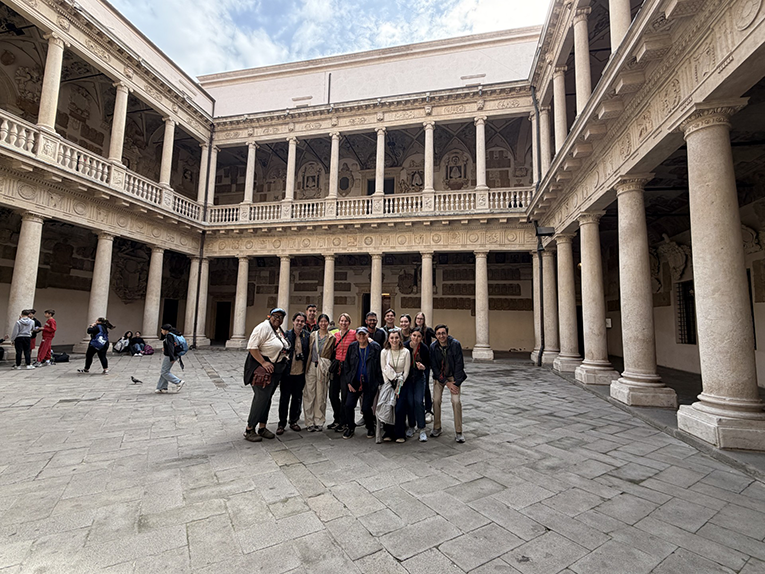
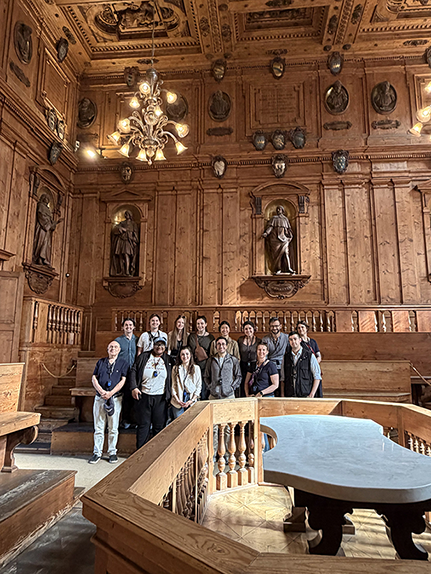
As home to the two of the oldest universities in Europe—Bologna and Padua—Italy served as a key location for the emergence of human dissection as part of medieval and early modern medical education. It is still possible to walk through the spaces where those early investigations took place. The Palazzo Bo at Padua houses the world’s first permanent dissection theatre, built in the 1590s at the instruction of Hieronymous Fabricius, one of Andreas Vesalius’s successors as Professor of Anatomy and Surgery. At the University of Bolgona’s Archiginnasio, you can sit on the benches of its 18th century anatomical theatre and look at the beautiful wooden carvings of influential physicians of the past such as Galen and Hippocrates.
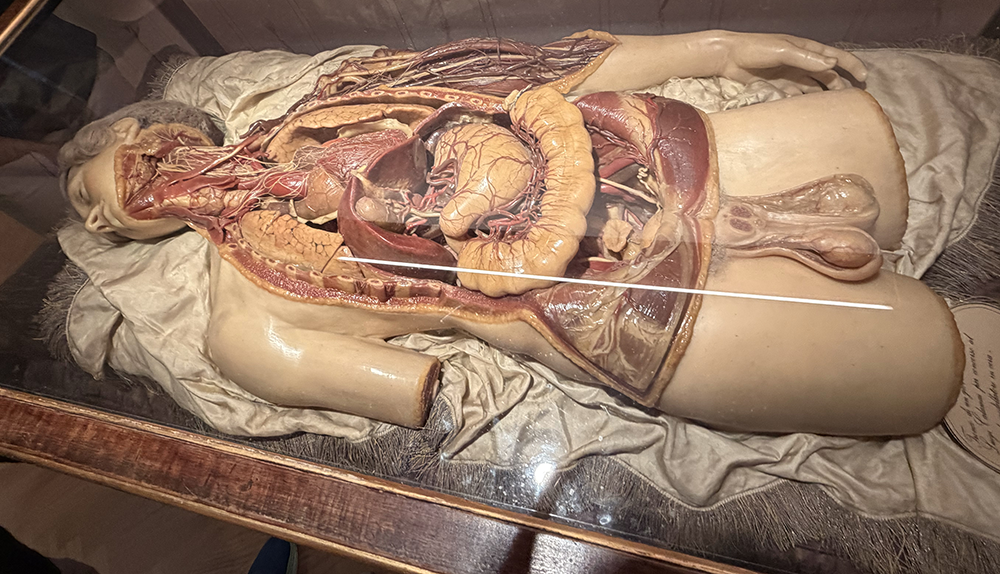
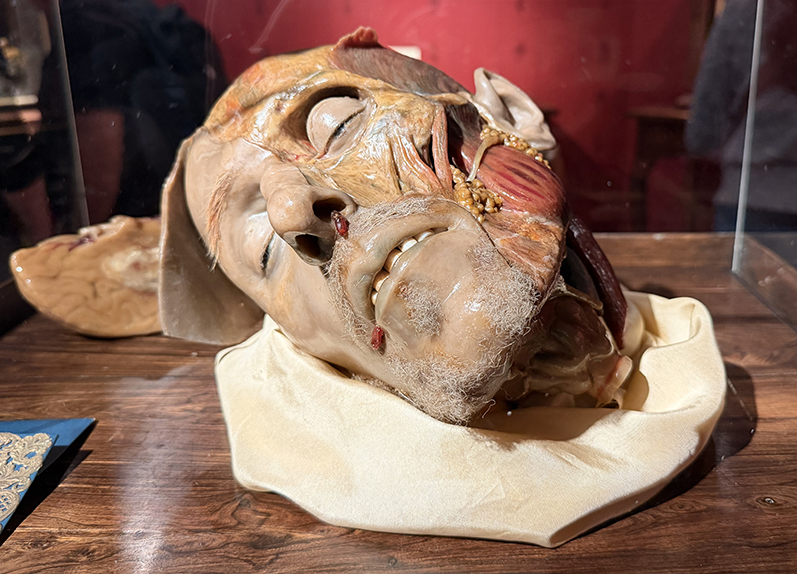
In addition to these remarkable physical spaces, Italy is also home to collections of historical specimens. The anatomical waxes preserved at the Palazzo Poggi in Bologna and La Specola in Florence provide a look at how medicine was studied in the eras before computer imaging or tissue preservation. In addition to being impressive on both a technical and artistic level, they can also provide insight into pathological conditions that have ceased to be part of the modern medical landscape.
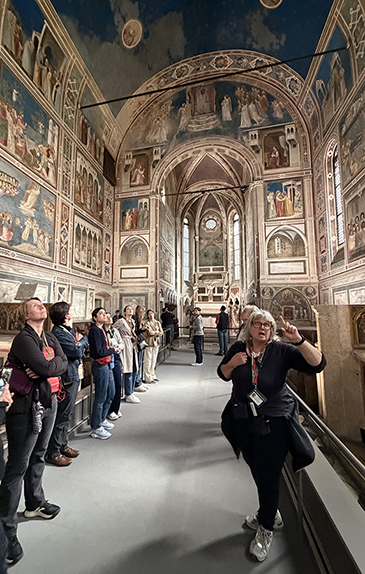
One of the key themes of the elective is how the practice and perception of medicine has always been influenced by the culture that surrounds it. To that end, the group visited sites that demonstrated how the artistic and religious environment of the Italian Renaissance impacted perceptions of the body and people’s relationship to medicine and healing. In Florence, students had the chance to spend time observing the anatomical detail of Michelangelo’s larger-than-life David, while in Padua they visited the Scrovegni chapel and learned about Giotto’s revolutionary advances in perspective, an artistic development that would later play out in anatomical atlases.
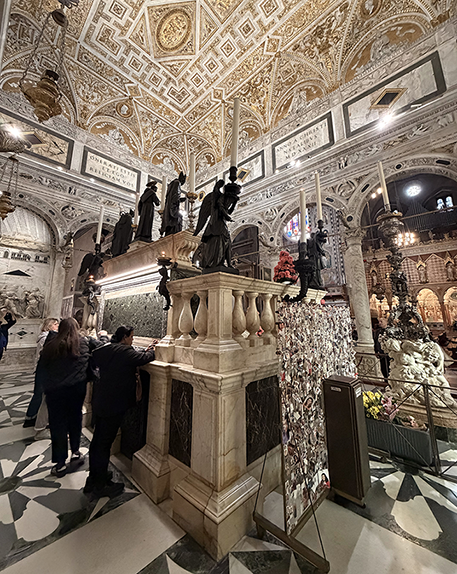
Also in Padua, they went to the Basilica of St. Anthony, which houses the saint’s tomb as well as a reliquary holding his tongue and jawbone. The basilica remains a major pilgrimage site, and watching pilgrims lay their hands on Anthony’s tomb and ask for the saint to grant them guidance and healing is a potent reminder of how medieval traditions persist in the modern world.