Health and Science Communication

Tips and resources to help you shine in your next scientific presentation — Part 1: Planning

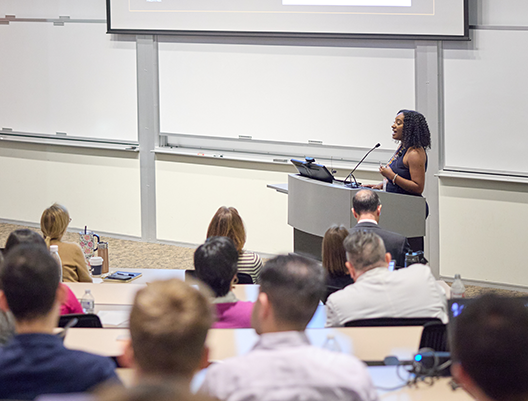
Presentations are a key component of academic life. The quality of your talk plays a critical role in how your message is received — but what makes a presentation good? While personal preferences vary and no single formula fits every scenario, the most impactful talks share a common trait: their visual elements are thoughtfully designed  [Read more]

Health and Science Communication

Resources for Communicating Effectively with Policymakers

As part of the #SciComm Seminar series, the Center for Health and Science Communication at Becker Library welcomed Ross C. Brownson, PhD, the Steven H. and Susan U. Lipstein Distinguished Professor of Public Health at the Brown School and School of Medicine, in April 2025. During the session, Dr. Brownson shared some insights on communicating  [Read more]

Health and Science Communication

Maximize the impact of your research with an effective graphical abstract

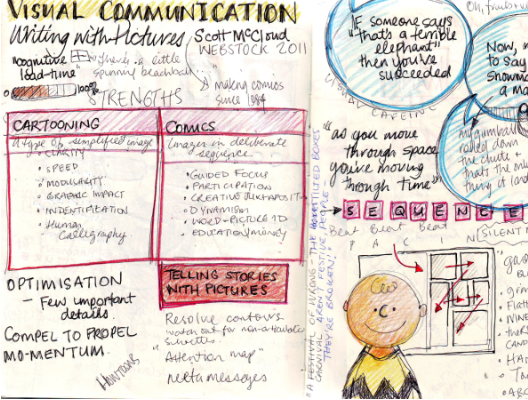
A graphical abstract is a visual summary of your research, designed to encapsulate your key findings and give readers a quick understanding of the main message, while inspiring them to engage and find out more. As the volume of scientific literature continues to expand, graphical abstracts have emerged as powerful tools for filtering and assessing  [Read more]

Health and Science Communication

Selected Resources to Recognize Health Literacy Month

Health literacy is the degree to which individuals have the ability to find, understand, and use information and services to inform health-related decisions and actions for themselves and others. Nearly half of U.S. adults read between a 7th- and 8th-grade reading level, but health information is often delivered at a 10th-grade level or higher. October is  [Read more]

Health and Science Communication

Making your next conference poster memorable – Part 2

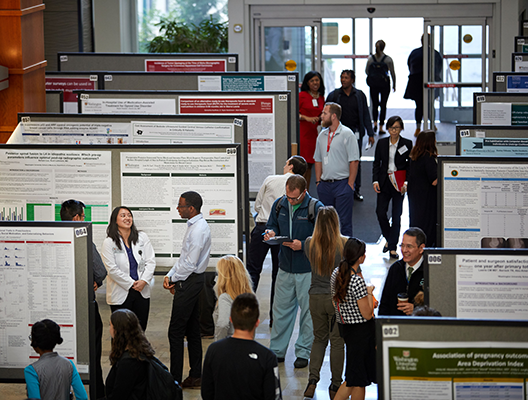
This is the second of a two-part series on effective poster presentations. Part 1 provided tips for designing and composing an outstanding conference poster.    The moment has finally arrived.   The session featuring your poster is about to start. You set it up last night so that fellow attendees would have a chance to browse it  [Read more]

Health and Science Communication

Inclusive and Preferred Language for Patient and Research Participant Communication – Selected Resources 

Health and science communication best practices include developing communication that is respectful, inclusive, and accessible to your audience. Here are some resources to support your regular communication with patients and research participants using inclusive and preferred language. The Centers for Disease Control and Prevention’s Inclusive Communication Principles include key principles for general communication and preferred terms for select  [Read more]

Health and Science Communication

Making your next conference poster memorable – Part 1

Conference posters are the most abundant form of scientific communication and frequently the first incursion of scientists-in-training into dissemination — ahead of oral presentations or peer-reviewed papers. For researchers at any career stage, posters are an excellent opportunity to share work in progress, test new ideas, network, and sharpen a variety of communication skills —  [Read more]

Health and Science Communication

SciComm Seminars Return

Our #SciComm Seminars are back this fall with exciting new topics to expand your science communication toolbox. Here are some highlights from the 2022-23 #SciComm Seminars series: Beth Prusaczyk, Assistant Professor of Medicine, drew from her experiences in policymaking and journalism for valuable tips on how to prepare, deliver, and follow up on your advocacy  [Read more]

Health and Science Communication

5 Tips to Simplify Academic Writing for General Audiences

As a researcher, you communicate your work to a wide variety of people daily. Besides engaging in jargon-rich discussions with your peers, you might share your research on a personal website, talk about it at a community event, or write about it on social media. Plain language can help you reach beyond academia and ensure  [Read more]

Health and Science Communication

Research or medical glossaries help simplify language, better communicate your work  

At the Institute of Clinical and Translational Sciences’ 4th Annual Symposium, “Making an Impact, Shaping the Future,”  panelist Dr. L. Ebony Boulware, vice dean for translational science research at Duke University, emphasized the need to speak a common language, especially when working with community members and research participants. While this isn’t always an easy task, it  [Read more]

1 2