
We often value books for their text. The text is, of course, the book’s reason for being, and book binding evolved in order to protect precious pages. But bindings have their own stories to tell, and those interested in the material aspects of book history have long appreciated them. In this post, we’ll take a look at some of the bindings we love here at Becker Medical Library and talk a bit about what makes them special.
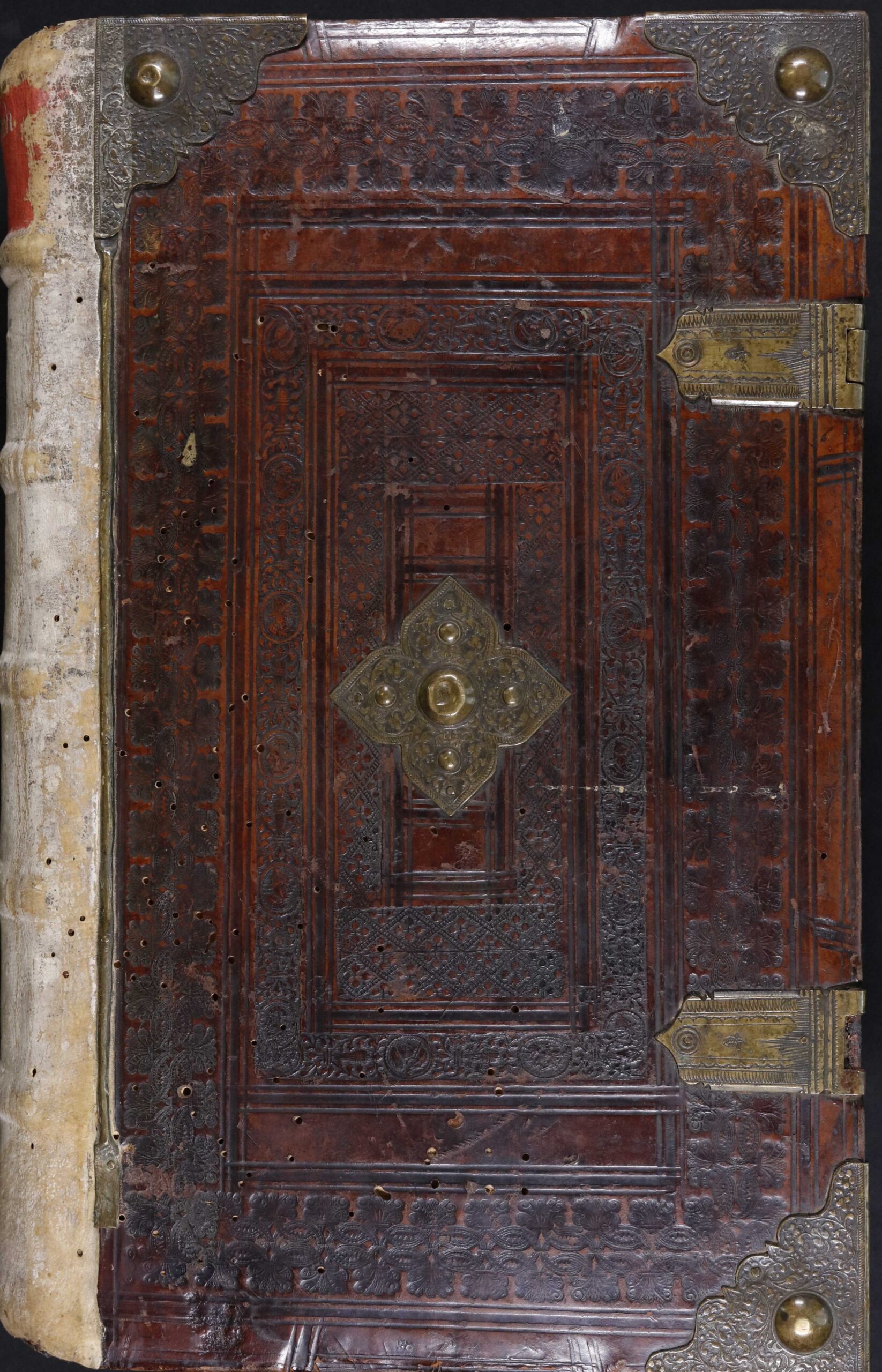
The first one encases a 1603 edition of the collected works of physician-cum-alchemist Paracelsus, and it is perhaps what comes to mind when you hear the words “rare book:” several inches thick, heavy enough to do damage if it fell on your head, and heavily decorated.
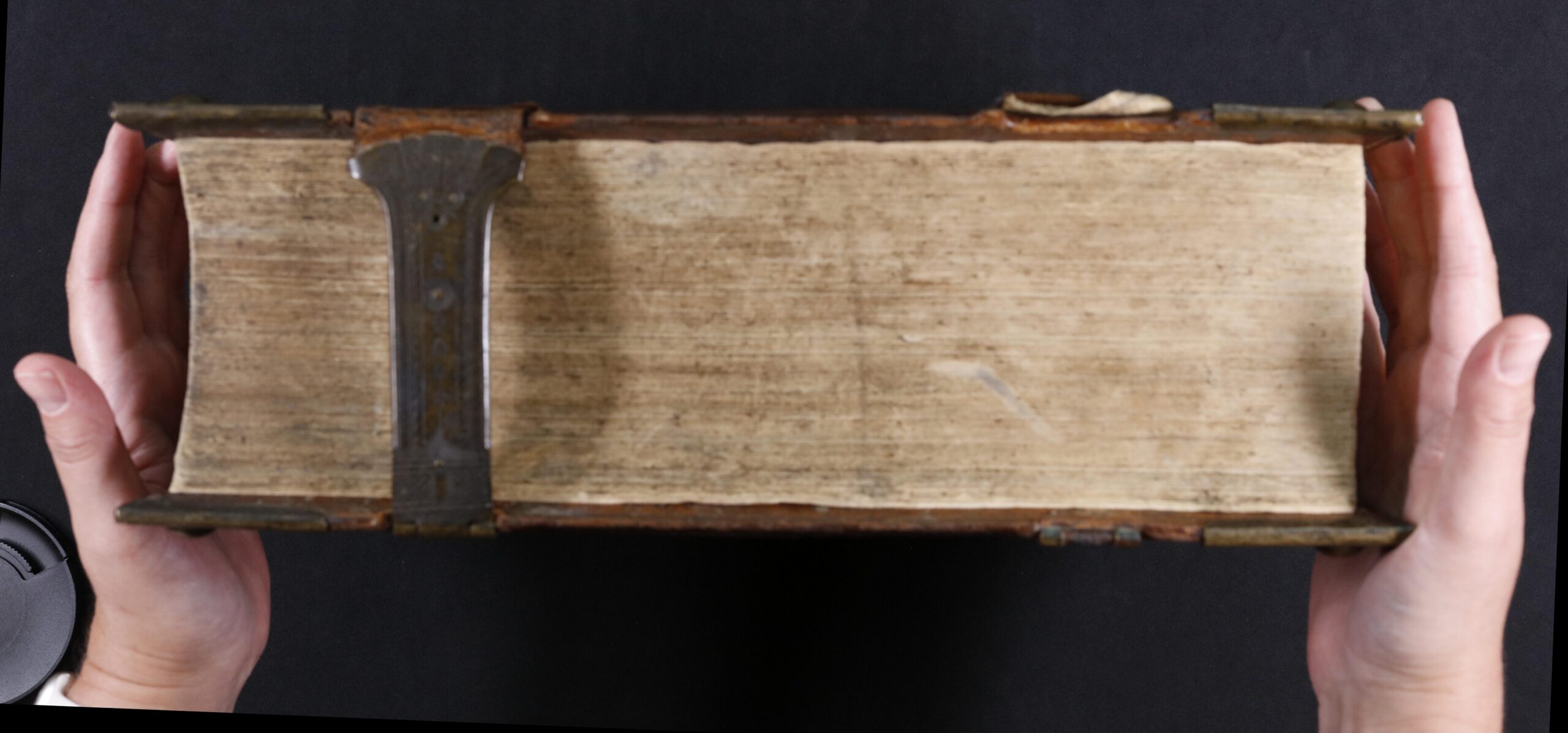
This binding is not only impressive to look at; it’s also very practical. When the text block itself is that thick, it needs some serious hardware to hold it together. The solid wooden covers covered in calfskin are a logical choice (although pigskin, which is sturdier, would probably be a tad bit better), and the thick metal clasps keep the book tightly closed (a holdover from the medieval period when pages were made from vellum and expanded with changes in humidity, which could cause the book to expand).
The most eye-catching element is probably the metal pieces attached to the corners and the center of the covers. These are called “furniture” and the raised metal studs are known specifically as “bosses,” an appropriate term given their imposing nature. But they don’t exist just to make books like they belong in George R.R. Martin’s A Song of Ice and Fire. They’re there to protect the corners and the cover from getting worn and damaged from contact with tables, shelves, and even other books, helping to preserve the valuable text for as long as possible.
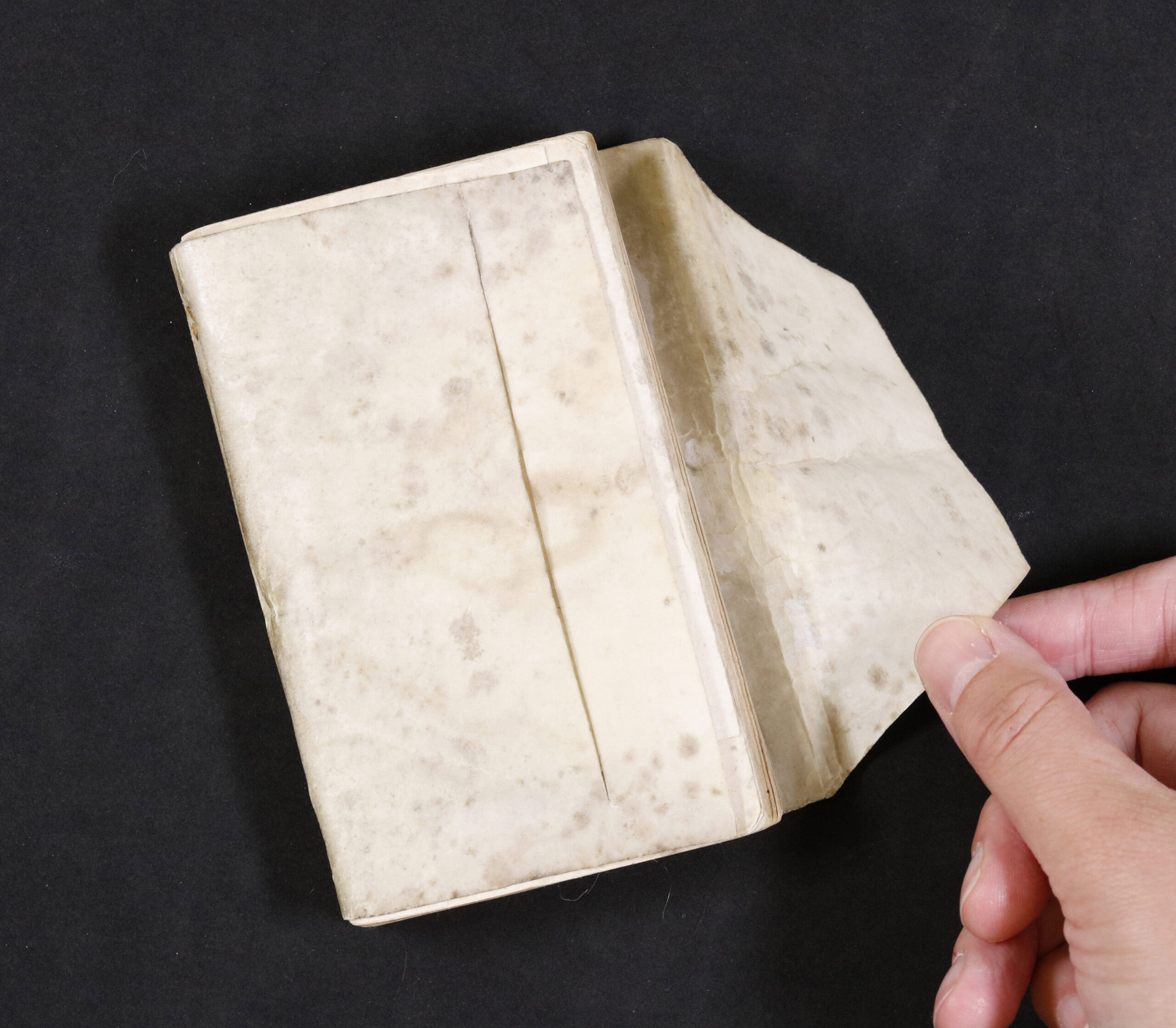
But a binding doesn’t have to be imposing to pique one’s interest. Take a look at this comparatively humble offering, an 18th century almanac from the Dutch city of Utrecht:
This is a limp vellum binding, one of the most economical options for protecting a text block. This style of binding doesn’t bother with heavy protective boards and relies instead on the vellum’s relatively tough qualities to protect the paper within. They were often used for books that were fairly small and thin, making them the paperbacks of the early modern book world.
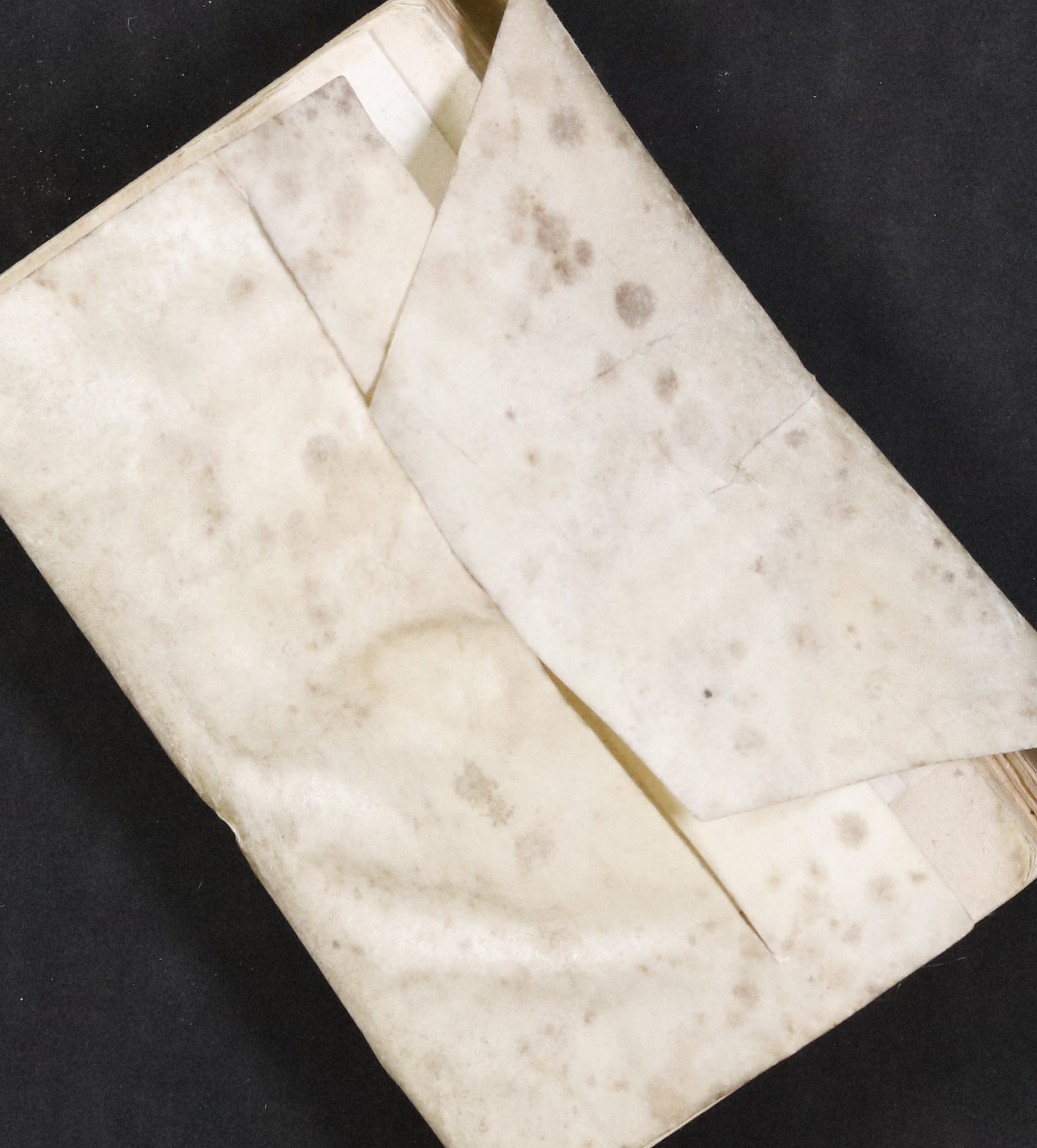
But there’s something special about this plain-looking binding. See how one of the flaps is extra-long, allowing it to tuck into a slit on the cover? That’s called a wallet binding, since the idea is that it holds the pages together nice and securely, allowing you to slip other things between them and use the book a bit like a wallet. It’s a very cool style that we kind of wish were still in fashion because it’s so handy.
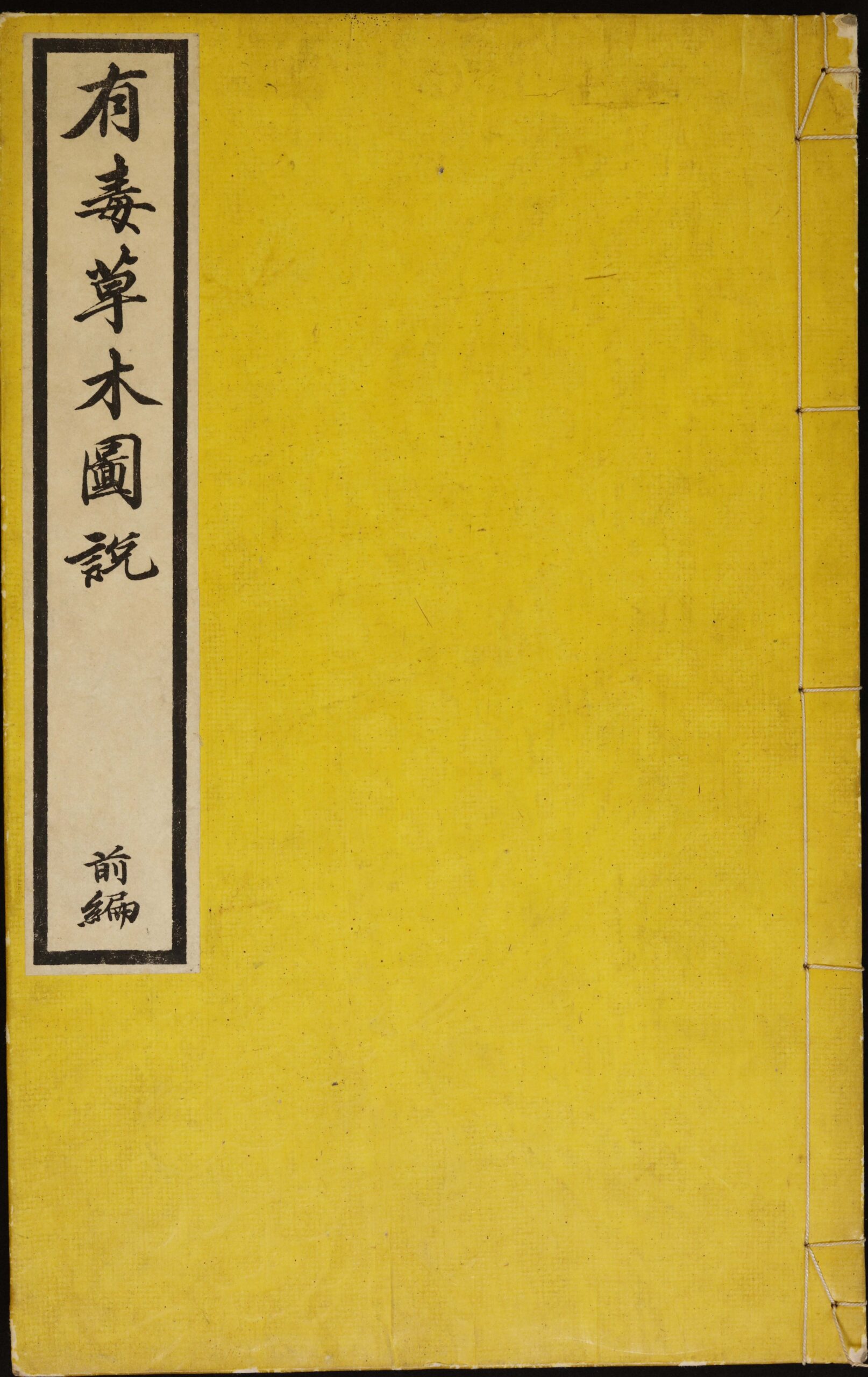
The final book in this post is a 19th century botanical work published in Japan. Compared to western bookbinding practices, traditional East Asian bookbinding can seem fragile, with their spines left bare and their covers made from paper instead of vellum or boards. But this format has several advantages. The first two books in this post are impossible to open flat, and a researcher wanting to consult them will have to use cradles to keep them fixed at an acute angle. But the flexible nature of East Asian bindings means those who need to consult the texts can do so without the need for all these support structures. Furthermore, East Asian bindings are by nature easy to undo, redo, and change – if your tastes change and you want a different color cover, or the cover is torn or dirty, it’s significantly easier to replace than a western style binding.
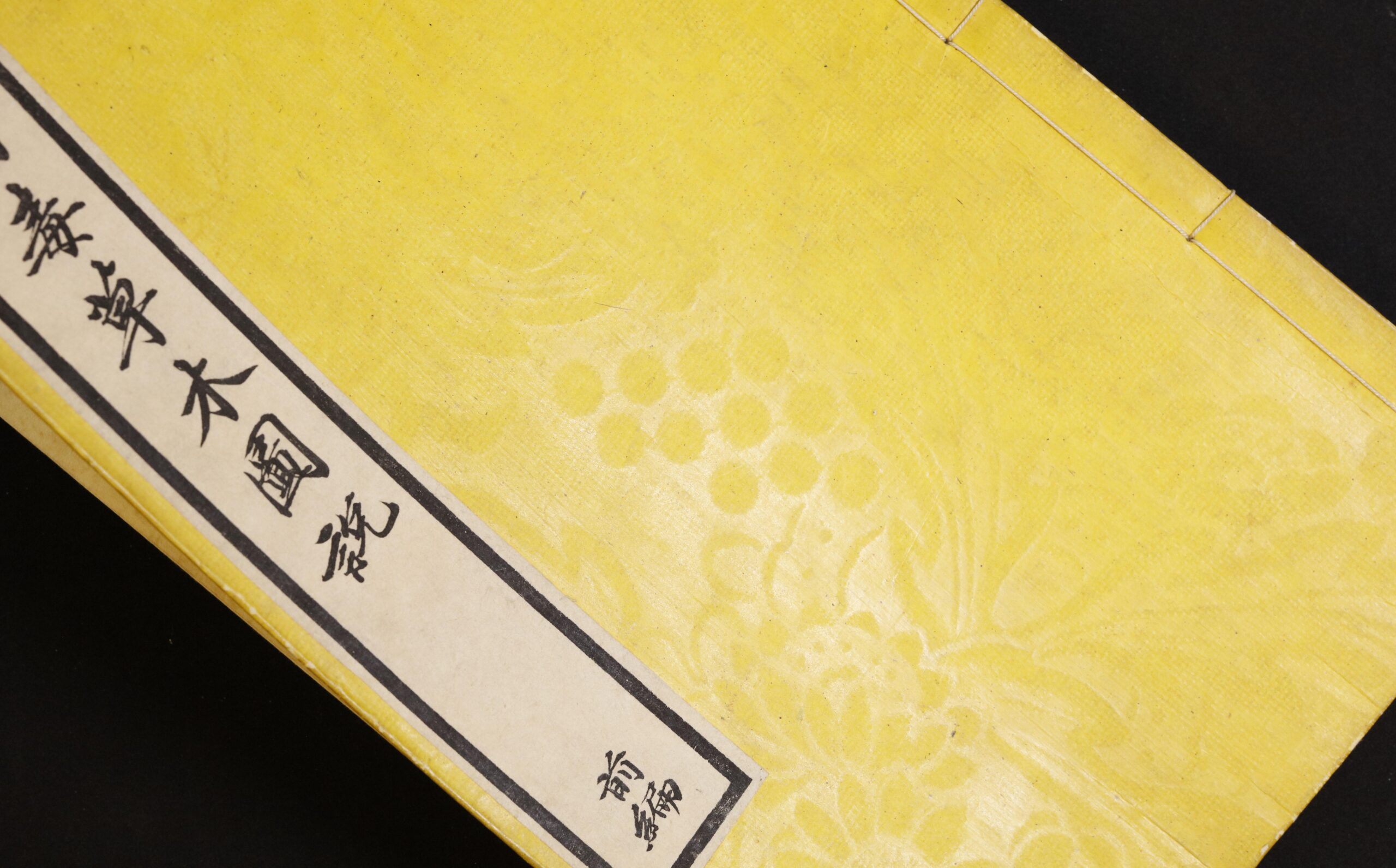
Another detail about this cover is its deceptively simple appearance. If you look at it straight on, it looks like plain yellow paper, but tilting it reveals an embossed pattern of flowers and leaves.
So, which style of binding would you enjoy most on your shelves? Something out of a fantasy novel, like our 17th century European example? A smaller, more portable format that can potential perform double duty, like the Dutch almanac? Or the flexible and highly adaptable East Asian stab bindings? Or maybe a bit of everything, so you can have the best of all worlds?