
The Becker Library exhibit “Compounding Potential – A History of the Neurosciences at WashU” gives a brief historical overview of neuroscience research at Washington University. The exhibit still is on display in the Glaser Gallery on the 7th floor of the Bernard Becker Medical Library for a few more days in June 2026 so it is not too late to see it in person and also pick up some remaining exhibit related swag.
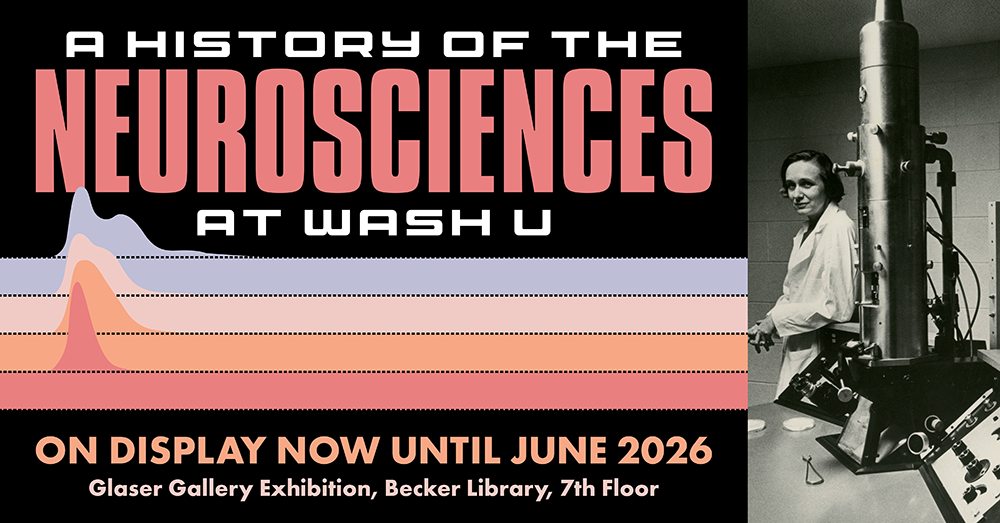
However, with over a century of pioneering work it was not possible to cover all the remarkable people and achievements in neurosciences at WashU within the physical exhibit. This post highlights some other notable individuals who contributed to the exceptionally collaborative work of the neurosciences. You can find out more also on the website version of the exhibit here: https://beckerexhibits.wustl.edu/s/neurosciences/page/about
Neuroscience research at WashU involves the entire multidisciplinary expertise of many scientists. It is not surprising that several of the individuals who played notable roles in the history of the neurosciences at WashU had notable achievements in other areas of biomedical research.
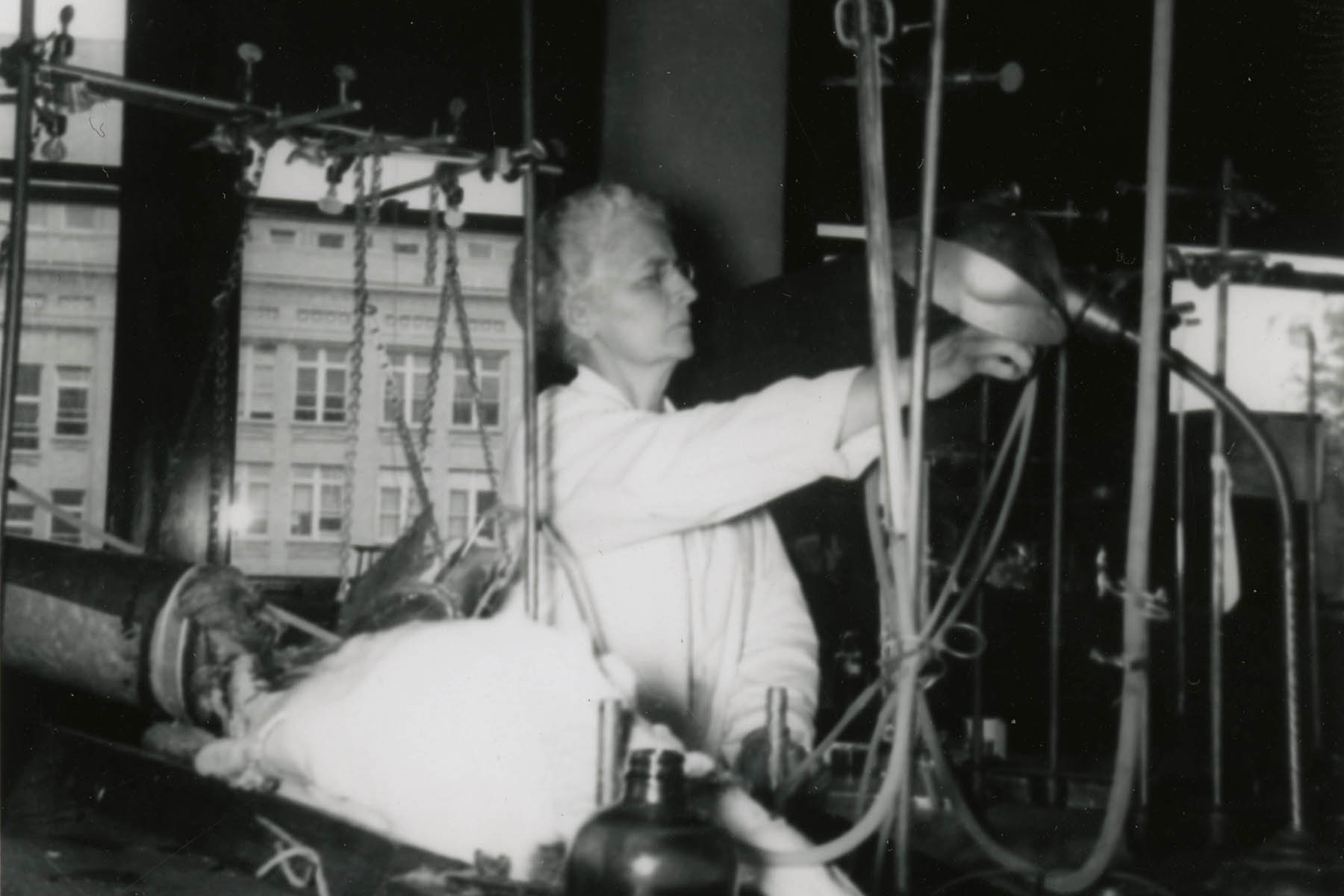
Helen Tredway Graham, PhD, was born in Dubuque, Iowa in 1890. She attended Bryn Mawr College on a full scholarship, graduating as class valedictorian in 1911 and earning an MA in 1912. She studied for a year at the University of Göttingen and then attended the University of Chicago. Her PhD advisor was organic chemist Julius Stieglitz. In 1915, when she received her PhD from the University of Chicago she was one of only four women to graduate with a PhD in the sciences from the university that year. While in Chicago she married surgeon Evarts A. Graham, MD. During World War I, Helen held a special research fellowship in the laboratory of John Jacob Abel, the chairman of pharmacology at Johns Hopkins while Evarts was stationed with the US Army in Baltimore. In 1919 Evarts was recruited to Washington University in St. Louis where he became the first full-time head of the Department of Surgery. She herself joined the faculty of WashU becoming an Assistant in the Department of Pharmacology in 1926. She collaborated with the head of pharmacology, Herbert Gasser, MD, in his research with Joseph Erlanger, MD and George H. Bishop, PhD on nerve conduction which would win Gasser and Erlanger the Nobel Prize in 1943. After Gasser left WashU in 1931, Graham continued to publish in neuroscience with Gasser and with other WashU researchers including Francis O. Schmitt, Lorente de No, and James O’Leary. Over a fifteen-year period she published twenty-nine papers on nerve stimulation, the influence of nerve size, and the effects of drugs on nerve transmission. Helen Graham would be the first person to record spinal cord action potentials.
For most of her career, Graham studied the physiology and pharmacology of peripheral nerves. However, at the age of 60, she switched to the study of histamines. She independently discovered the histamine storage function of mast cells and blood basophiles, and she developed highly sensitive methods for measuring histamine in body fluids. Shortly before her death at age 80 in 1971, Graham successfully applied for a renewal of a NIH grant to continue her work in histamine. Helen also created and taught the first course on statistics at the School of Medicine.
Her academic progress at WashU included appointments as Instructor in 1928, Assistant Professor in 1931, Associate Professor in 1937, and she became one of the medical school’s first women full professors in 1954. She was a member of the American Society for Pharmacology and Experimental Therapeutics, the American Physiological Society, and the Histamine Club.
Helen Tredway Graham in addition to being a research scientist and teacher and the mother of two sons, was active in many civic activities. She and Evarts were founding members of the Board of Trustees of the John Borroughs School. She was active in the American Association of University Women, the League of Women Voters, the St. Louis Civil Liberties Committee, and various community and municipal committees for environmental issues.
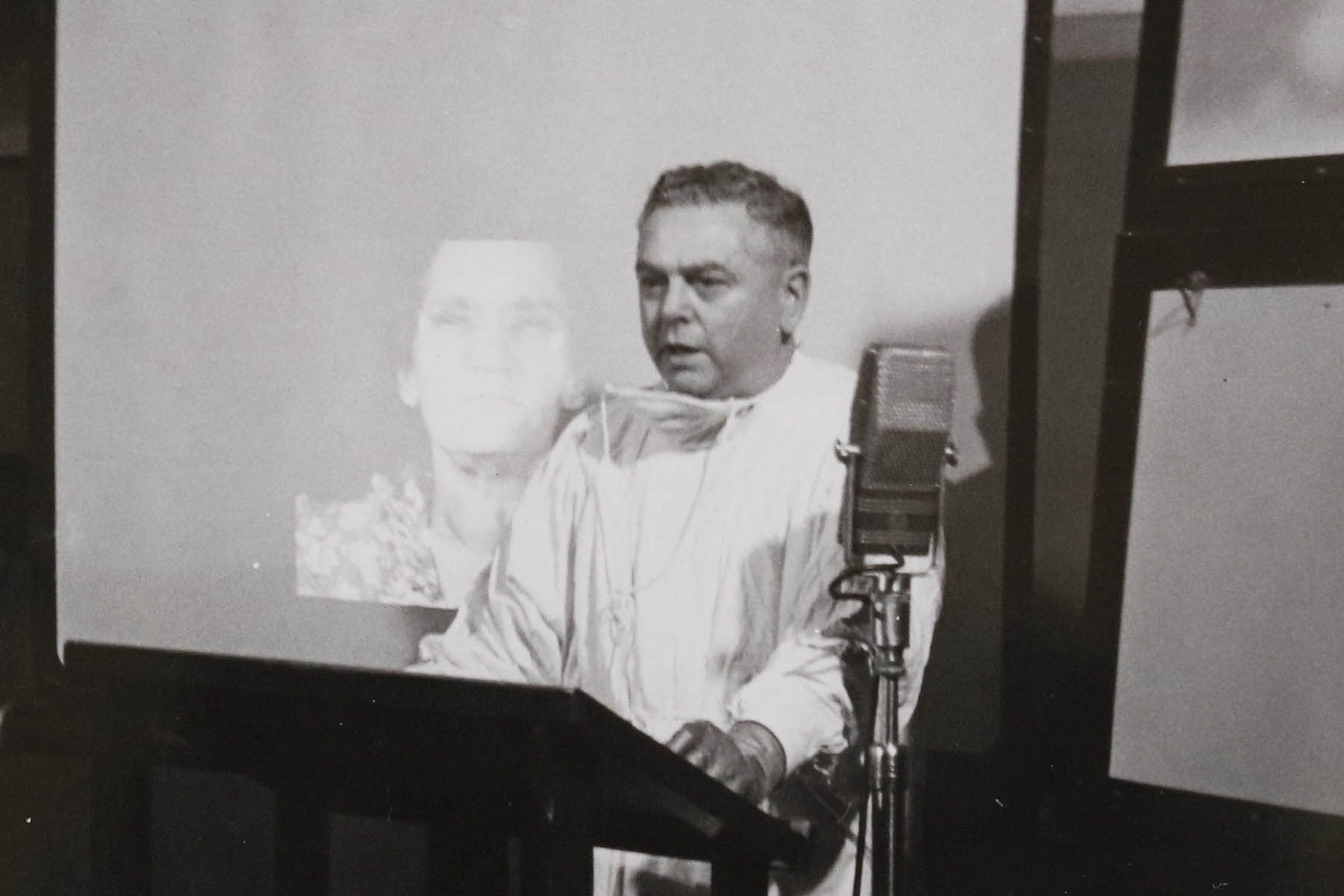
Peter Heinbecker, MD, a 1921 McGill University medical graduate, did surgical training in New York and at Johns Hopkins. Heinbecker wanted to continue his surgical training at WashU and reached out to the chair of surgery, Evarts Graham, the husband of Helen Graham and a strong believer that post-graduate surgical training should include additional research training. However, there were no open positions in Barnes Hospital’s residency program. Graham encouraged Heinbecker to look for external funding for a fellowship. Heinbecker eventually came to WashU Medicine in 1926 as a National Research Council Fellow in Physiology. Conducting research in the Department of Physiology, chaired by Joseph Erlanger, Heinbecker worked principally with George Bishop. Bishop was the self-proclaimed “electro-physiologist” who made critical engineering contributions to Joseph Erlanger’s and Herbert Gasser’s Nobel Prize winning research on nerve action potentials. In the late 1920s and early 1930s, Heinbecker and Bishop would make very important discoveries concerning the C wave of unmyelinated nerve fibers and obtained the first reliable measurements of the speed of conduction in human nerves. However, Heinbecker’s work with Bishop would create friction with Erlanger over who had investigative primacy over the nerve research. In 1928 Heinbecker was recruited to the Department of Surgery, first as Assistant and later as Associate Professor in Surgery and then as Professor of Clinical Surgery, Heinbecker oversaw the surgical residency program, which under Graham was one of the earliest to emphasize a strong research component. After his work with never fibers, Heinbecker continued his neuroscience investigations, conducting research on neuroendocrinology and the metabolic mechanisms of the autonomic nervous systems powering cardiac function.
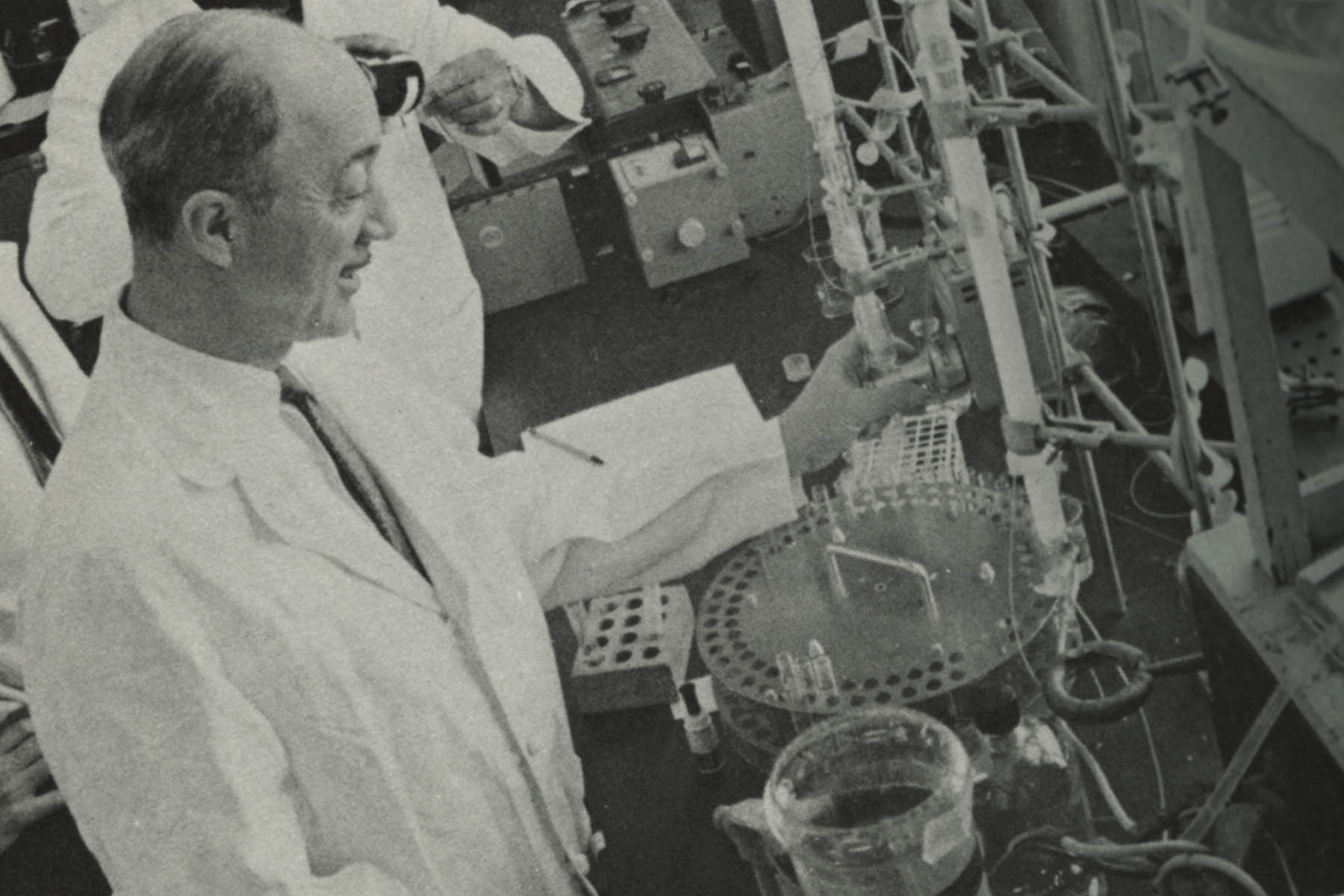
Ernest St. John Simms was two years into the baccalaureate engineering program at the University of Minnesota when his father suddenly died in the 1930s. Simms returned home to St. Louis to help support his family. He first worked at Washington University as a laboratory technician in the Department of Surgery and at Homer G. Phillips Hospital as a serologist. During World War Two he worked for a small arms plant making munitions for the war effort. Simms became the spokesman for Black workers at the plant protesting unequal working conditions.
After the war, Simms returned to WashU Medicine and the Department of Surgery labs. He published with Heinbecker on their research on neuroendrocrine disorders. In 1953, he was hired by Arthur Kornberg as a research assistant in the Department of Microbiology. Over the next six years, Simms co-authored several papers relating to the biochemistry of DNA replication. Simms was an integral member of the research team that led to Kornberg and Severa Ochoa sharing the 1959 Nobel Prize “for their discovery of the mechanisms in the biological synthesis of ribonucleic acid and deoxyribonucleic acid” in 1959. Kornberg ultimately moved to Stanford and invited Simms to join him, but Ernest chose to stay at WashU. Kornberg said that Simms “contributed measurably to Washington University’s reputation for research pre-eminence.”
In 1971, Ernest Simms was finally promoted to Associate Professor of Microbiology and Immunology, making him one of the first Black men to be a tenured faculty member at WashU Medicine. In addition to his teaching and research, Simms also became involved with the Admissions Committee and the advancement of minority students at WashU in the 1970s and early 1980s.