
For the past few weeks, I’ve been working my way through the more than 800 slides found in the Institute for Biomedical Computing Records (RG035). The collection includes materials related to the Institute for Biomedical Computing (IBC) and its predecessors, the Biomedical Computer Laboratory (BCL) and the Computer Systems Laboratory (CSL).
Established in 1964, BCL and CSL occupied adjoining buildings on the Medical Campus and helped pioneer the acceptance of computers in the biomedical research community. CSL focused on designing computing technologies suited to biomedical research problems, while BCL focused on applying these cutting-edge technologies to biology and medicine.
Given their role at the forefront of these developments, BCL and CSL faculty and staff gave a lot of talks at academic conferences and lectured in a lot of university classrooms. And, before the advent of tools like PowerPoint, speakers and educators relied on slides to illustrate the concepts and technologies featured in their presentations.
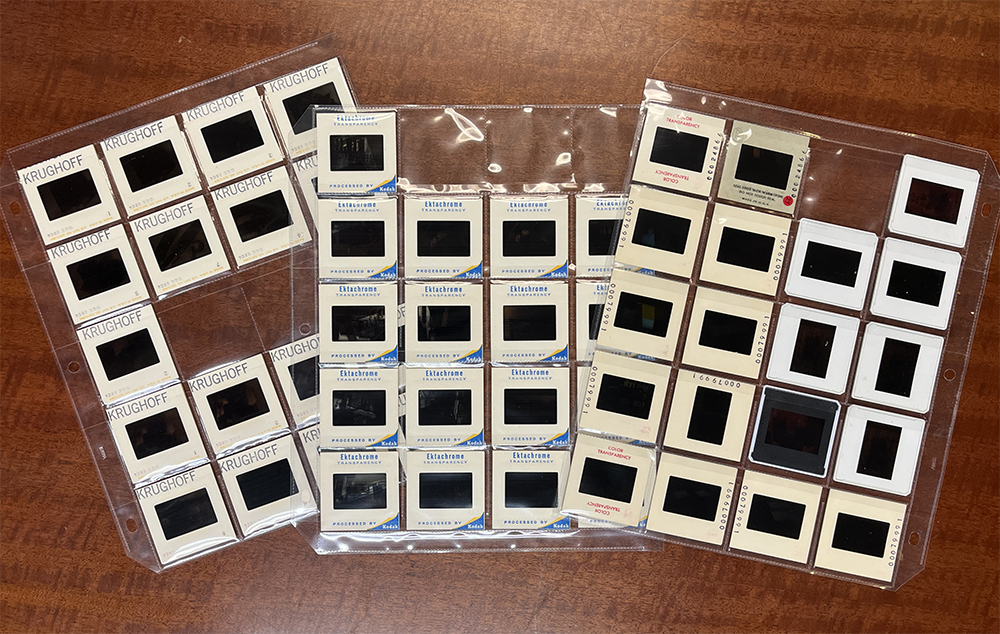
A slide is a positive photographic image on transparent film that has been mounted in a frame and can be projected onto a viewing surface. Many people are likely familiar with 35 mm black and white or color film slides, in which transparencies are mounted in 2 x 2 inch frames and are viewed using a slide projector. 35 mm slides comprise more than half of the slides in this collection.
The collection also includes more than 260 glass slides. Measuring approximately 3 ¼ x 4 inches, glass slides—also called lantern slides—typically consist of a positive image on a glass support, along with a glass cover. The two glass plates are sealed together along the edges with (usually black) tape. Lantern slides can be viewed using a projector commonly known as a magic lantern. While the production of glass slides was much less common by the 1950s—especially as color film slides became commercially available—their use did continue into the 1960s.
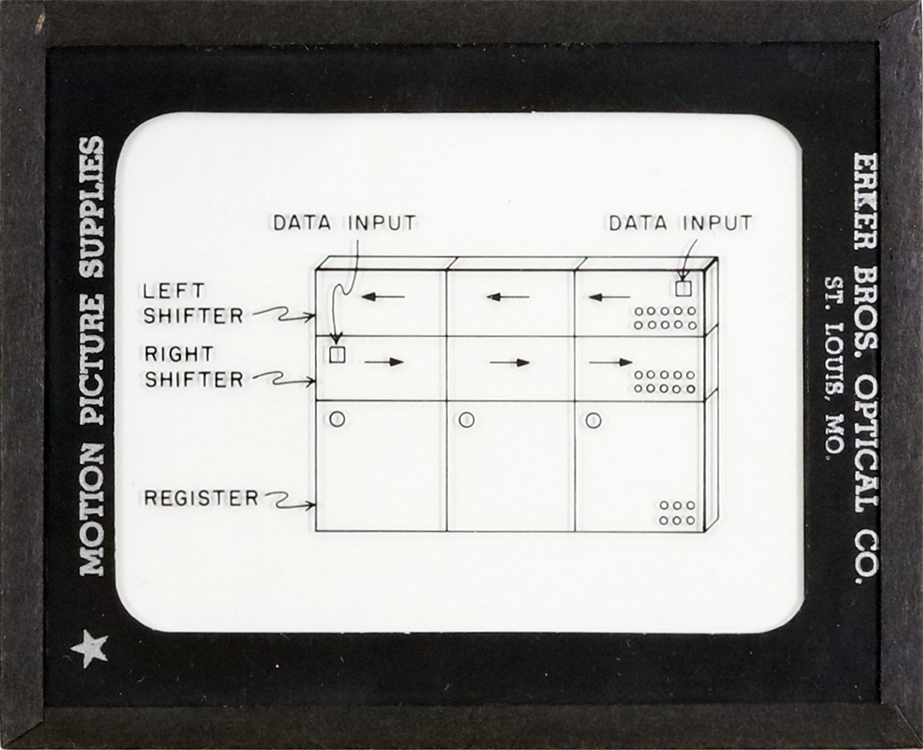
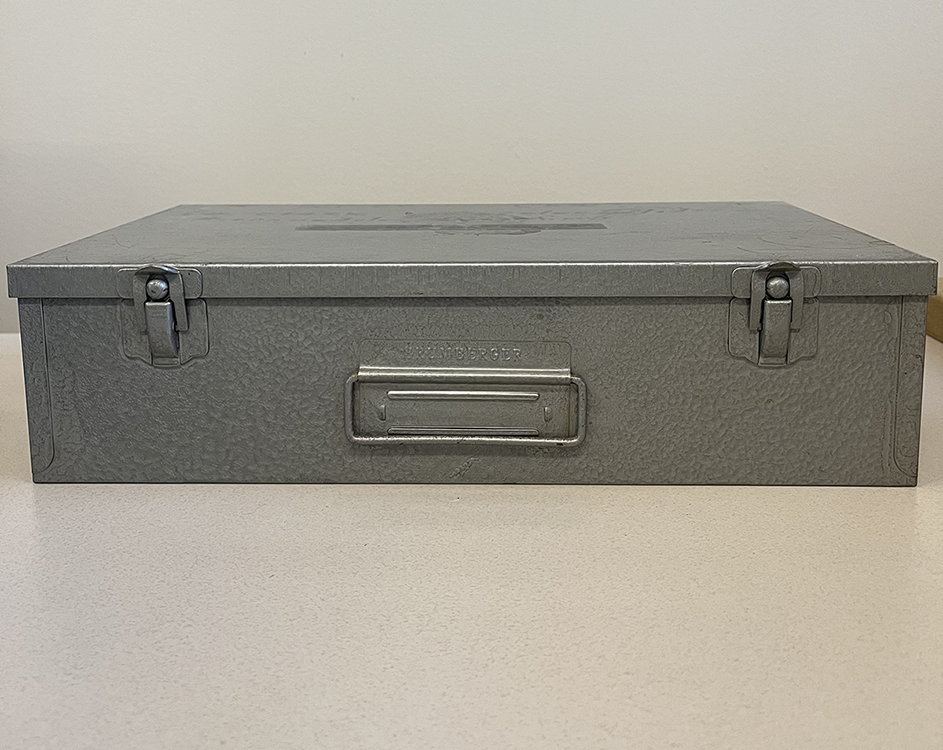
A glass slide (left) and one of four metal storage cases in the collection containing glass slides (right).
As I worked my way through the slides, I checked their condition and made sure they were housed in archival quality containers. If identifying information was lacking, I also tried to get a sense of who or what I was seeing, and when, where, and why the slides had been created. Sometimes, I recognized people or technologies thanks to other photographs within the collection. For example, the image on the left is from a 35 mm color film slide. It shows a jig, a device used by CSL staff to display, assemble, and test circuitry. I recognized it from a photograph of Charles Molnar, then the assistant director of CSL, looking at the same item.
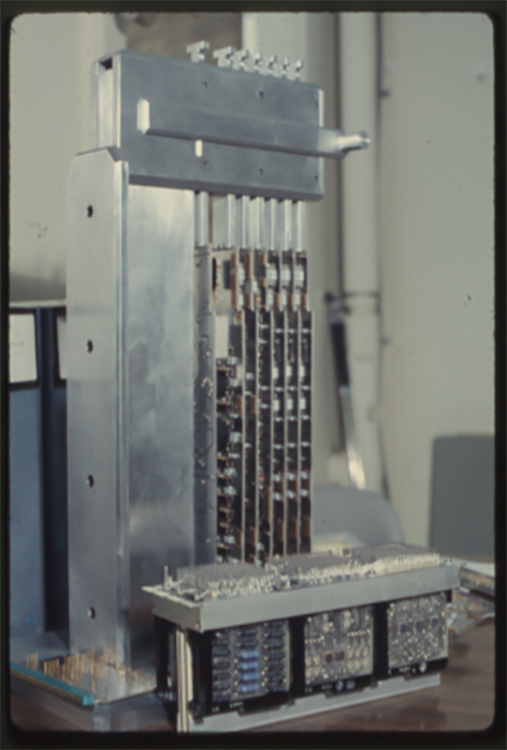
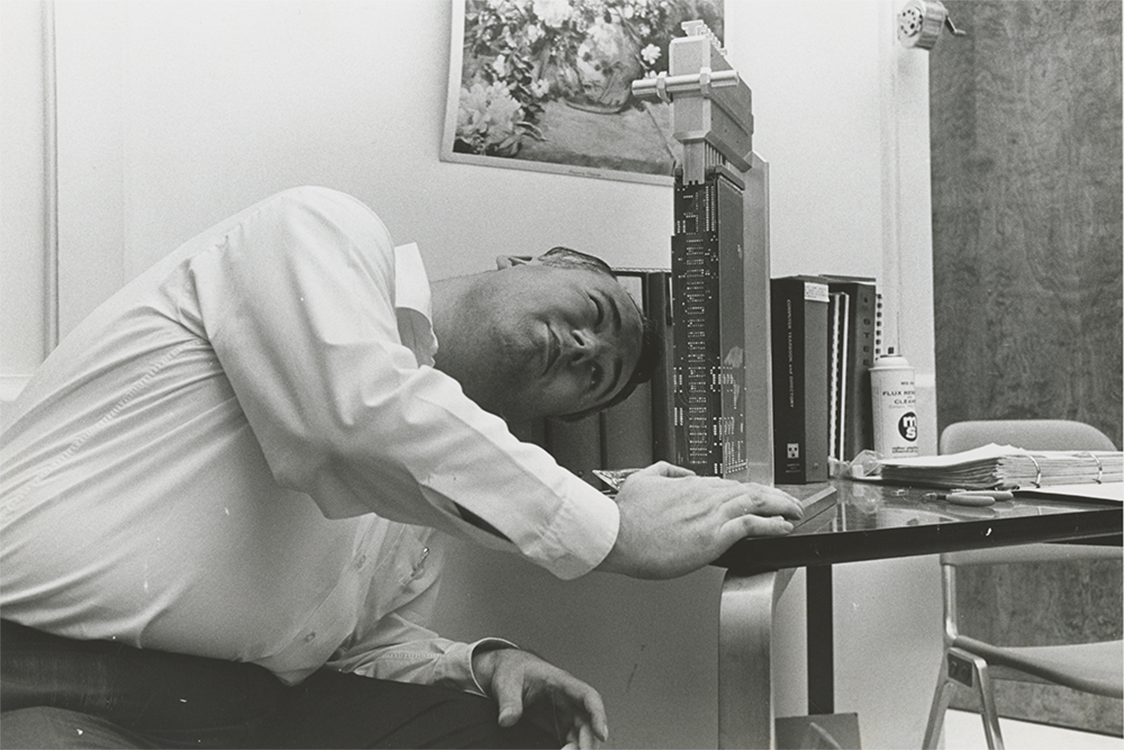
Image of an assembly jig from a color film slide (left) and a photograph of Charles Molnar looking at the same device (right).
Other slides were in clearly labeled containers, which made the process of identification easier—though in some cases, I still had to do a bit more digging. For example, two storage cases containing lantern slides had handwritten labels that read “67 SJCC.” A little research led me to the American Federation of Information Processing Societies’ Spring Joint Computer Conference—or SJCC—which in 1967 was held in April in Atlantic City, New Jersey. A quick check of the published conference proceedings showed that CSL staff members Wesley Clark, Charles Molnar, Mishell Stucki, Severo Ornstein, Thomas Chaney, Richard Olson, Antharvedi Anné, Richard Dammkoehler, Asher Blum, and William Ball all presented papers on macromodular computer systems. I also recognized that some of the papers had been included as reprints in CSL Technical Report No. 44. Thanks to these resources, I was able to identify the images on the slides and to infer they were used during conference presentations.
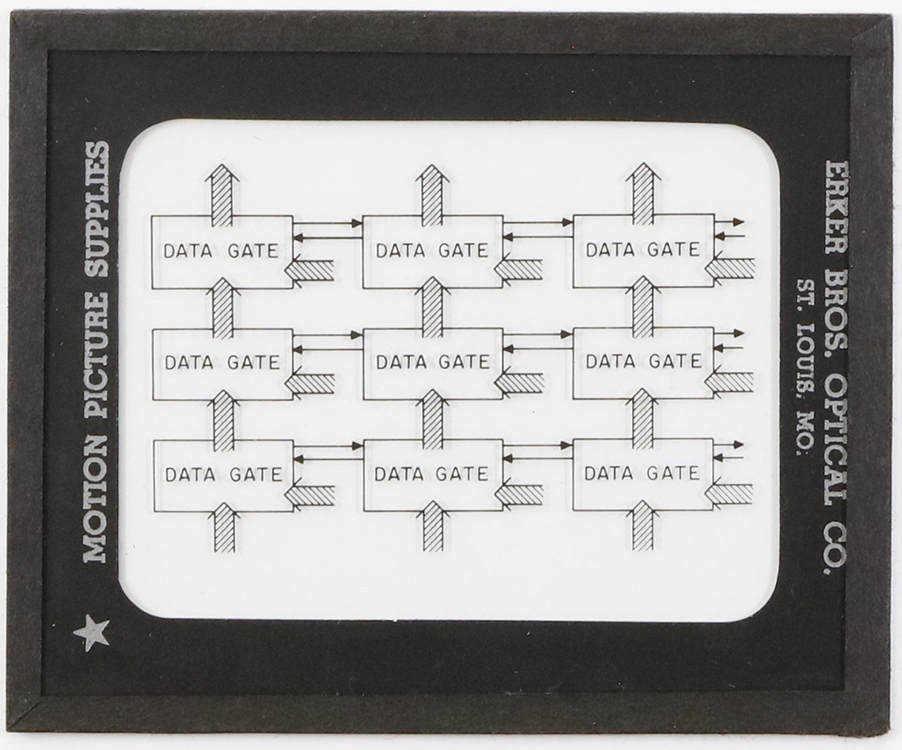
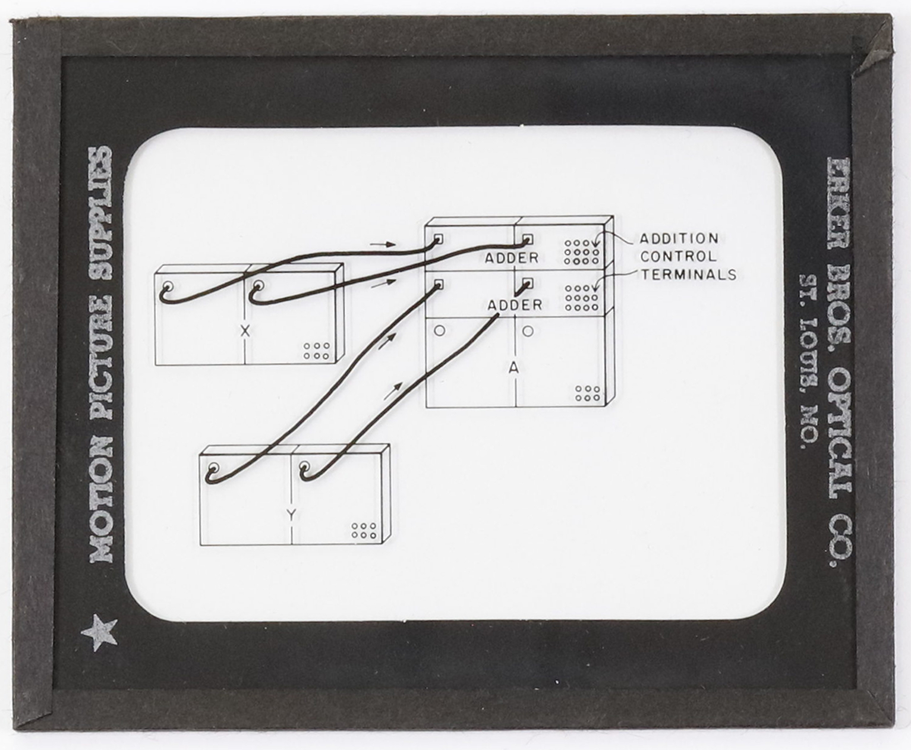
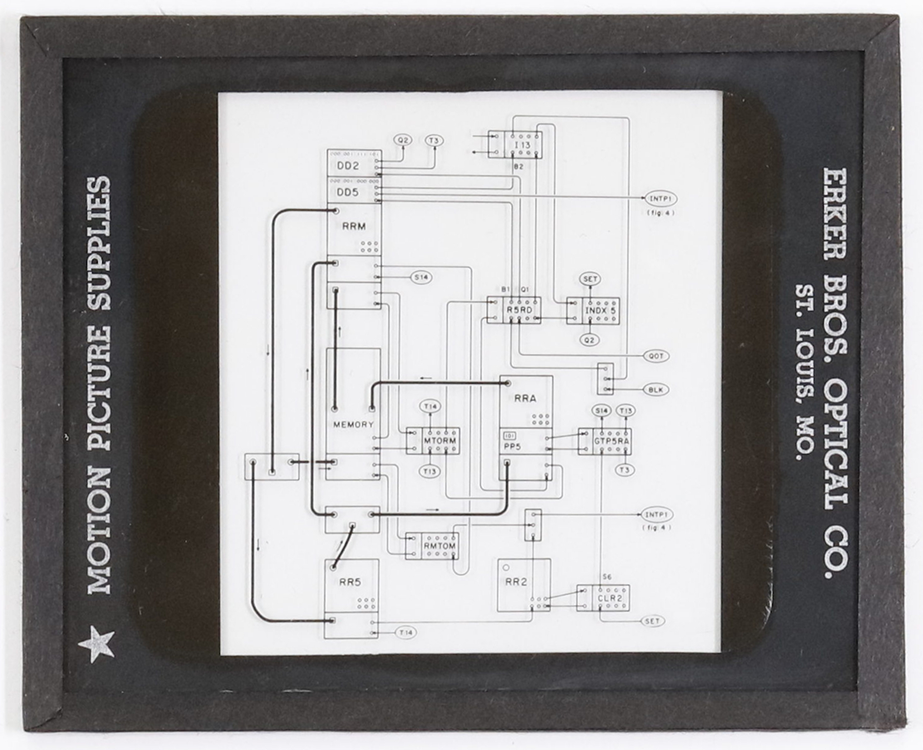
Three lantern slides depicting figures related to macromodular systems. Macromodules were like building blocks that non-experts could use construct computer systems of varying sizes and complexity. The slides appear to have been produced by Erker Brothers Optical Company, a St. Louis, Missouri-based company founded in 1879 (which is still in business today!).
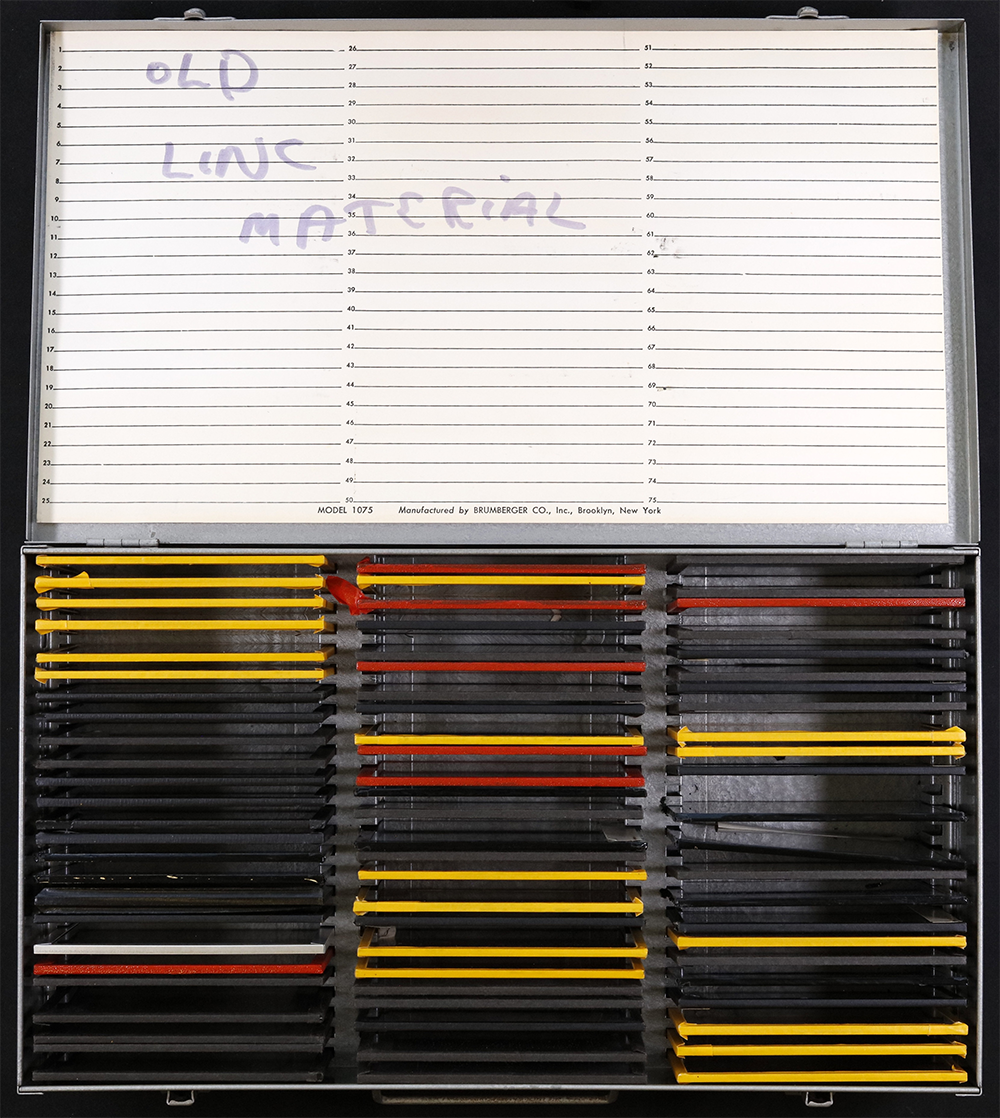
Then there are those images that, even with context clues, remain something of a mystery. The five slides pictured below, for example, were found in succession in a container that includes a handwritten note, “Old LINC Material.” What should we make of them? A person with an idea for a small computer component? A person inspecting the component? Complex wiring? Are those…coins? And for the final slide, perhaps, as a colleague suggested: the devil is in the details?
What do you think?
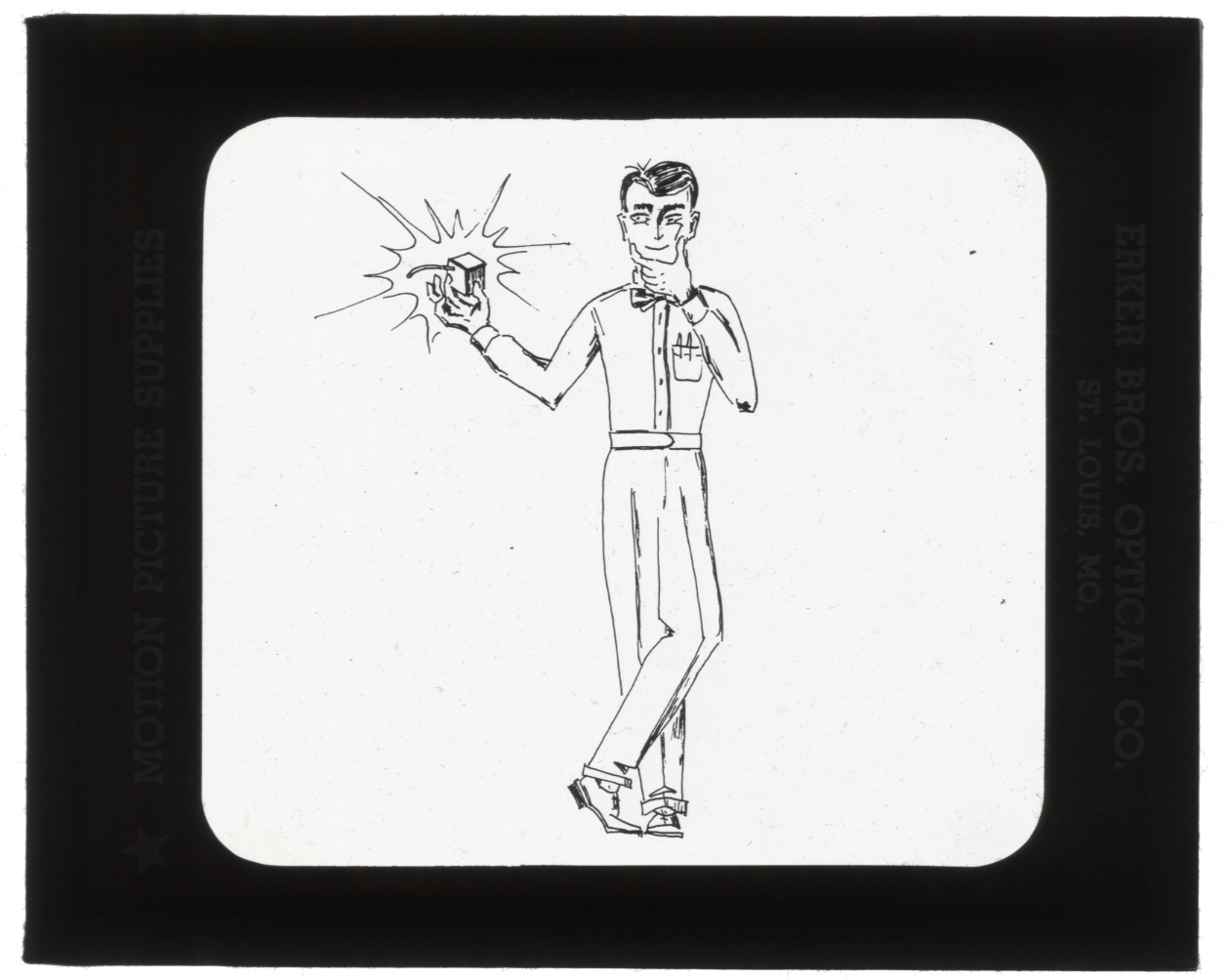
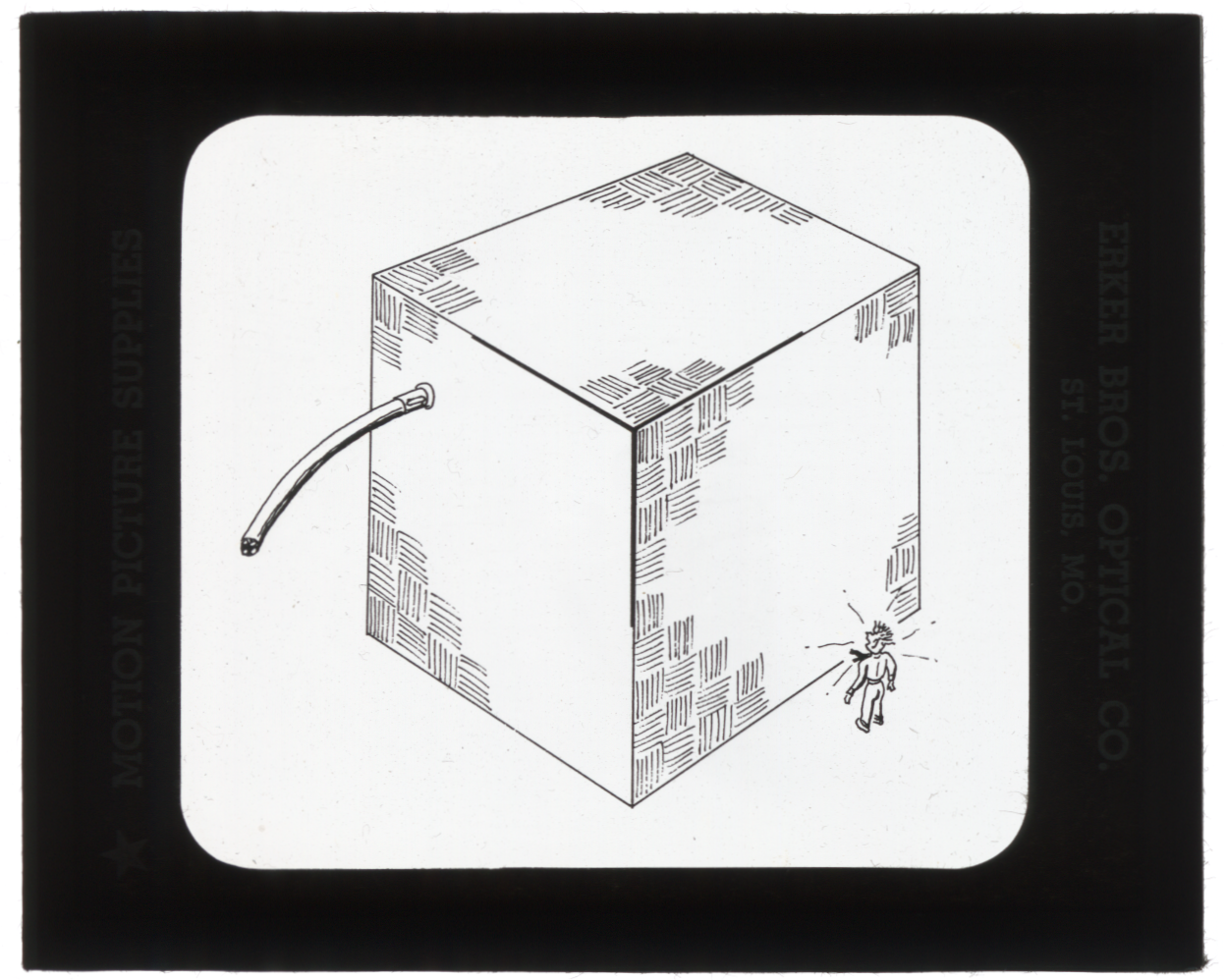
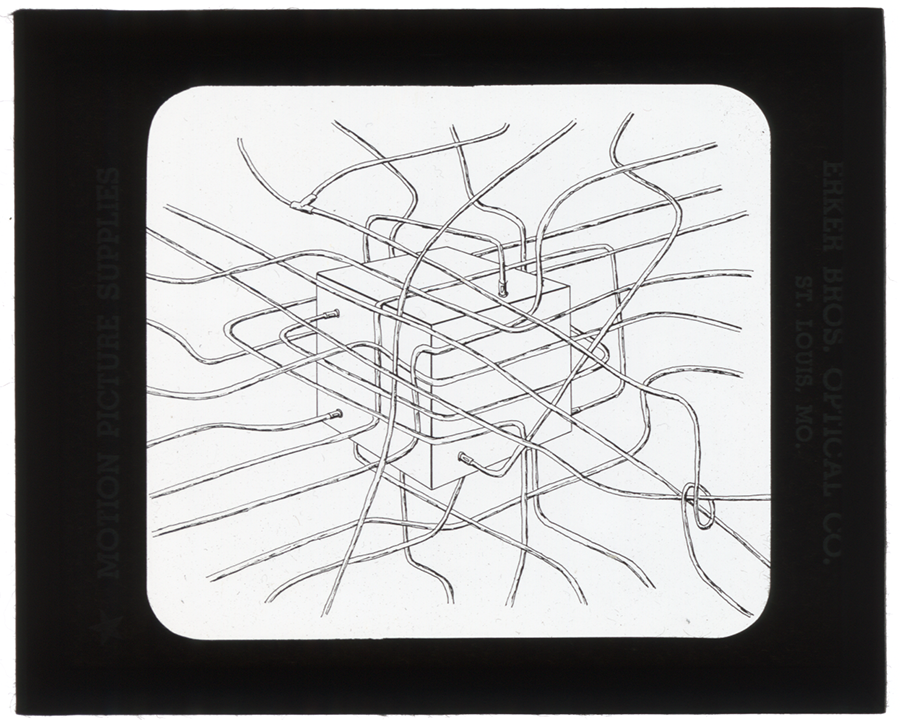
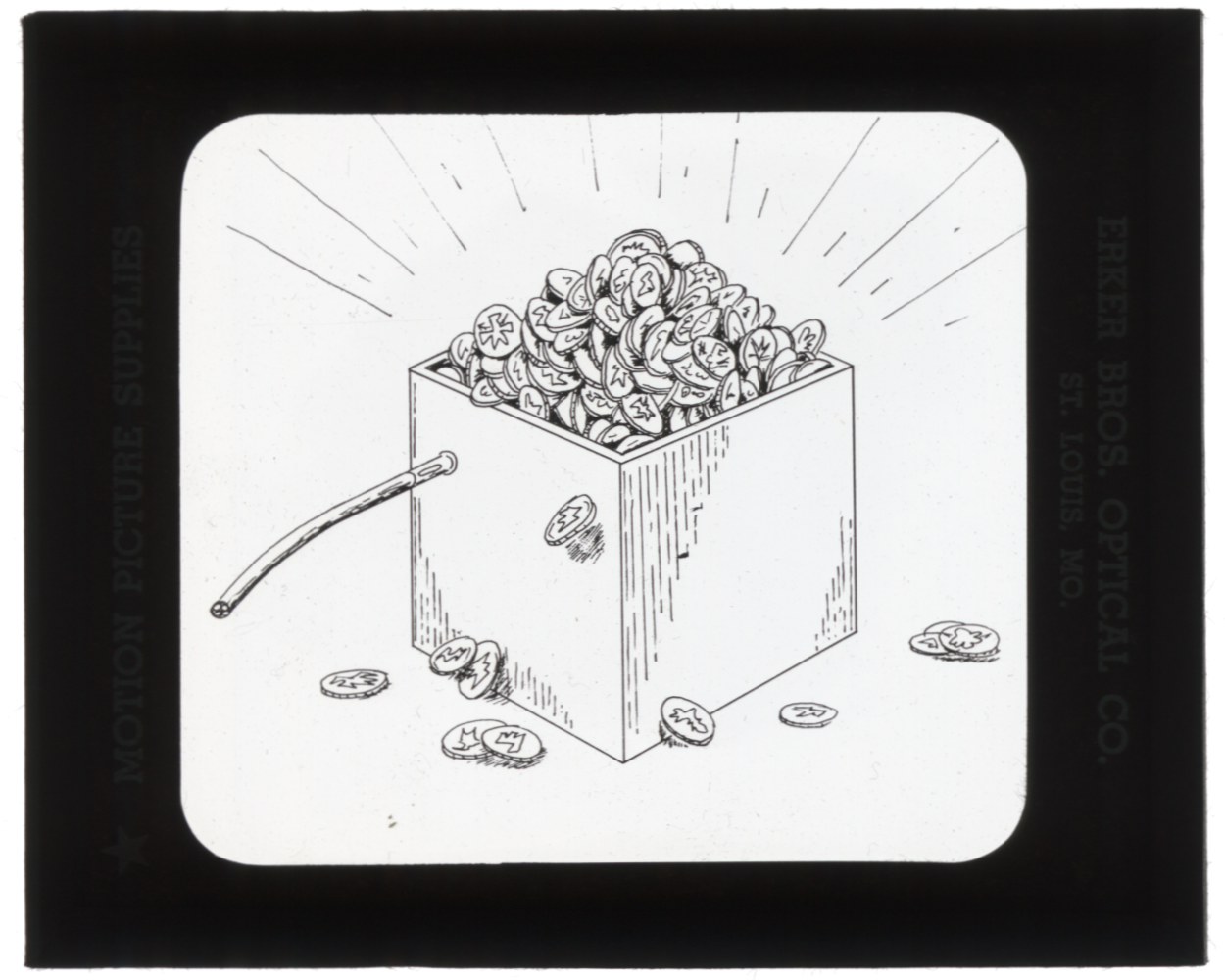
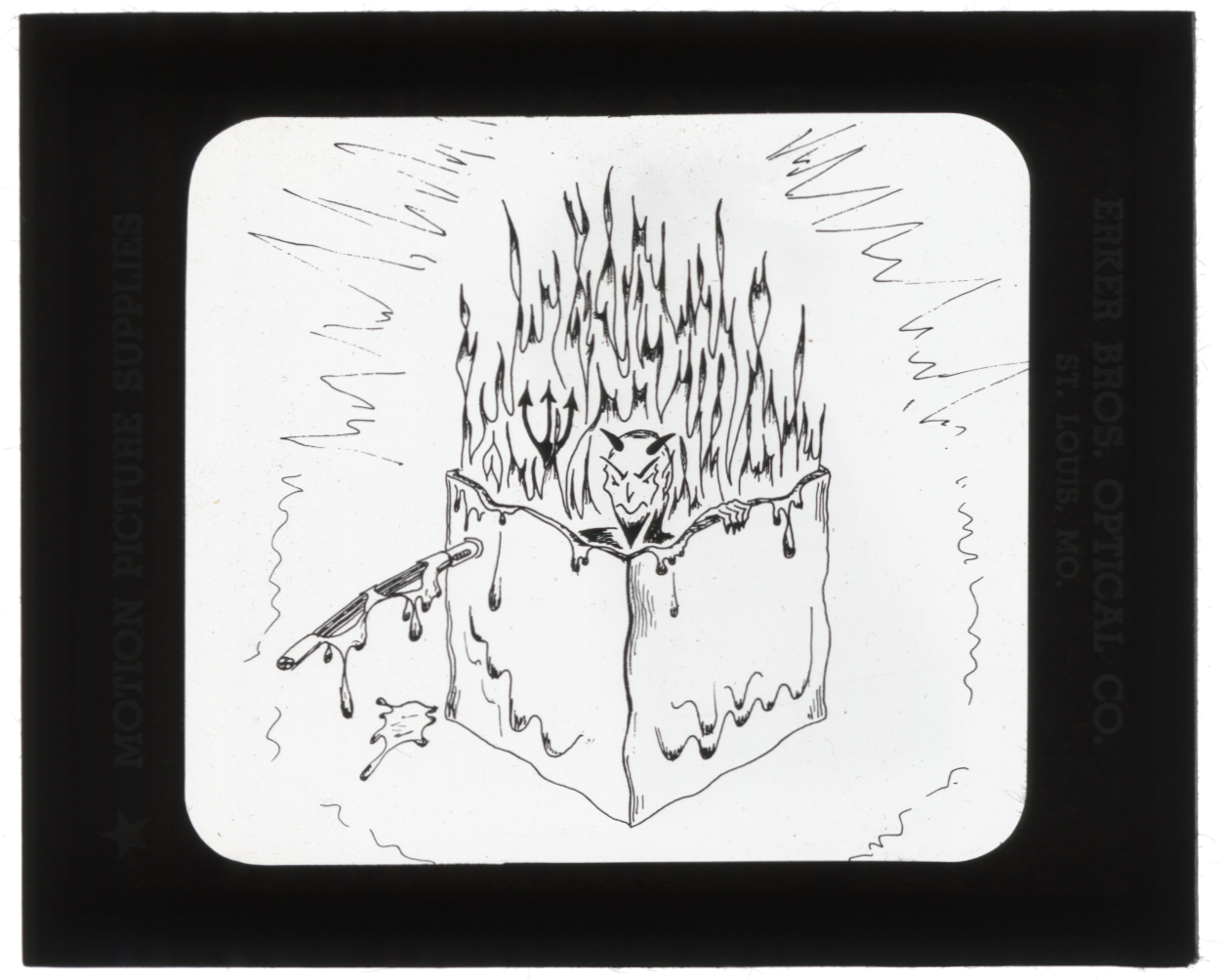
Five lantern slides illustrating…what, exactly?
Sources
All images are from the Institute for Biomedical Computing Records (RG035).
Hammond, Ariel, Noelle Zocco, Alejandra Tomeo, and Diego Jimenez. “Please Don’t Break: Best Practices for Digitizing and Archiving Glass Plate Photographs.” Journal of Western Archives 15, no. 1 (2024). https://doi.org/10.59620/2154-7149.1173.
“Lantern Slides: An Historical Technique.” An Artful Life: The Colored Lantern Slides of Anna Caulfield McKnight, University of Michigan Library Online Exhibits. Accessed May 4, 2026. https://apps.lib.umich.edu/online-exhibits/exhibits/show/caulfield/lantern-slides–an-historical-.
“Slides & Transparencies.” Preservation Self-Assessment Program (PSAP), University of Illinois at Urbana-Champaign. Accessed May 4, 2026. https://psap.library.illinois.edu/collection-id-guide/slide.