
Georg Bartisch’s Augendienst is one of the most famous books in the history of ophthalmology. While it is not the first ophthalmologic text to be printed in the vernacular German, it is perhaps the first text to grant the subject such elaborate treatment: Augendienst is no cheap pamphlet with basic illustrations, but a large folio of some 270 leaves and eighty-eight striking full-page woodcuts. Rather than hiring a professional artist to create these images, Bartisch drafted them himself. They depict everything from morbidities of the eye to the tools of the trade to charms and talismans, providing a fascinating look into early modern ophthalmological practice.
One of the topics discussed in the text is cataract surgery. We’ve written about this particular procedure before, but today we’re going to focus specifically on the woodcut image that depicts the operation. Here we have the version from Augendienst’s first edition, published in 1583:
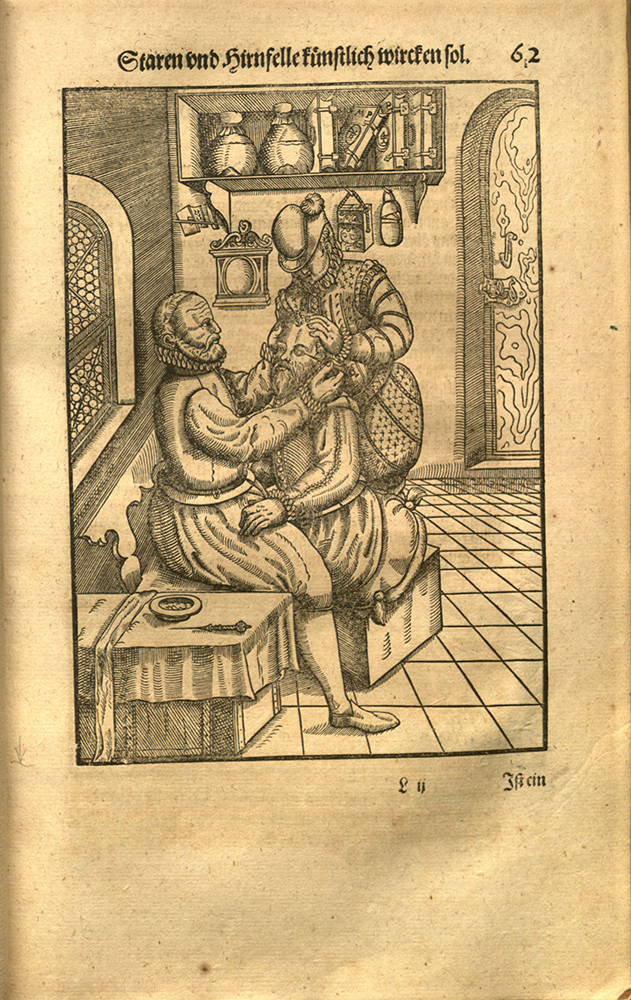
It depicts three men dressed in typical 16th century German attire. The one on the left is the oculist, who holds a cataract needle in his right hand to perform the operation on the patient, who is seated in the center. On the right is an assistant holding the patient’s head steady. Now, take a look at the version from the 1686 edition:
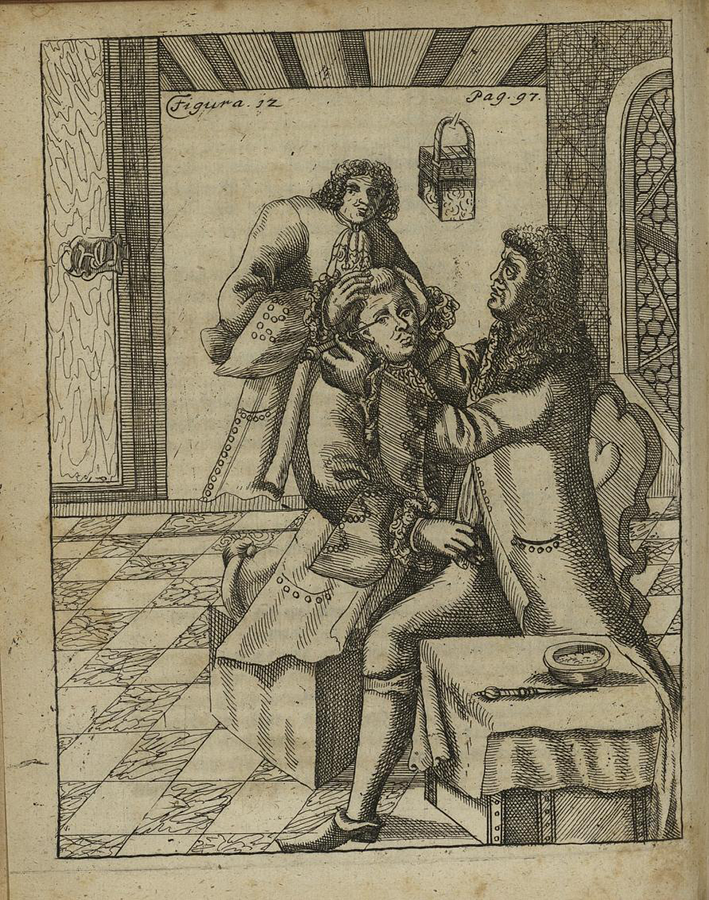
In the 100 years since the first edition, some changes have been made. The most obvious one (aside from the extremely questionable bodily proportions of the assistant) is the clothing worn by the trio. The 16th century short jackets and short hair have been replaced by the longer coats and hairstyles favored in the 17th century. It is this iteration of the image that goes on to have a lengthy afterlife.
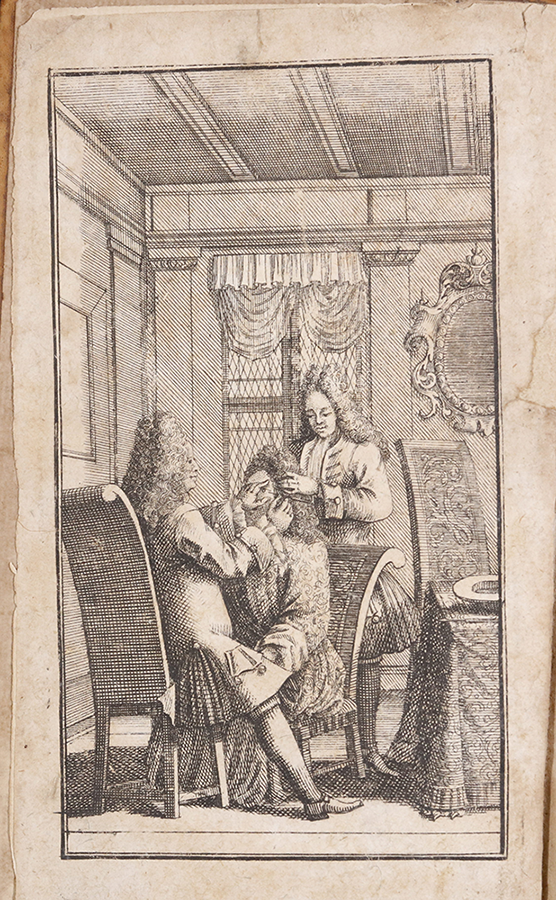
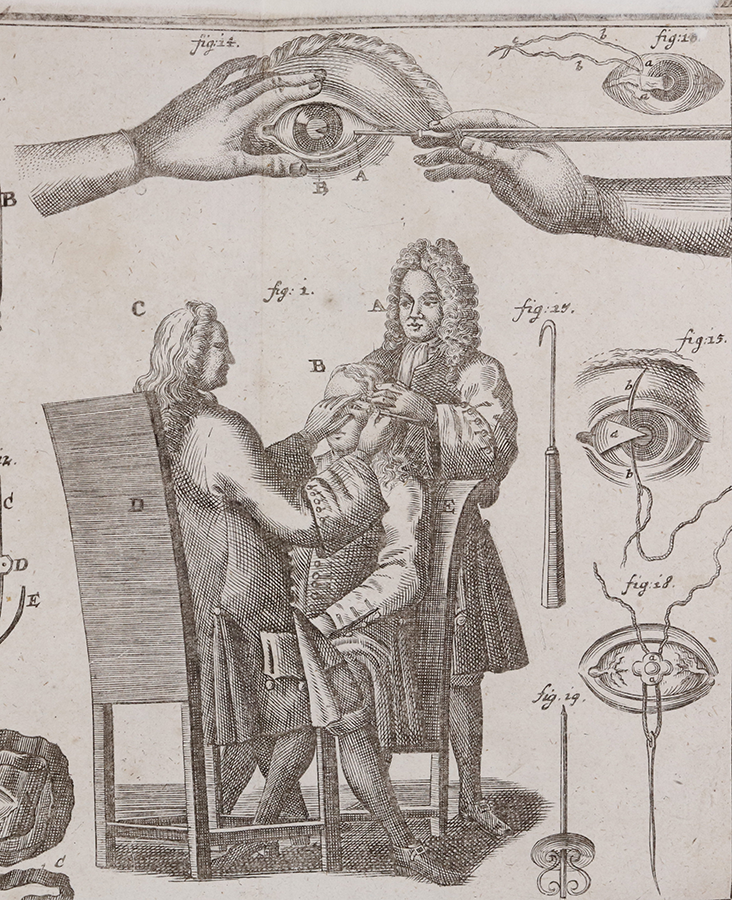
The frontispiece on the left comes from Lorenz Heister’s De cataracta glaucomate et amaurosis tractatio, published in 1713 in Altdorf. It is clearly influenced by the 1686 version of the Bartisch cataract scene: we see the same trio of figures in the midst of the operation, and they are also dressed in their contemporary fashions, with long coats, heeled shoes, and lofty wigs. A very similar image also appears in Heister’s Chirurgie, his comprehensive text of surgical theory and practice that was first published in 1718 and quickly became something of a surgical classic.
Now, let’s travel across the ocean for a look at the Japanese ophthalmologist and scholar Dojun Nakanome’s text Ganmoku Shinron. This work includes several woodcut illustrations, some of which show eye operations in action. And one of them looks strikingly familiar:
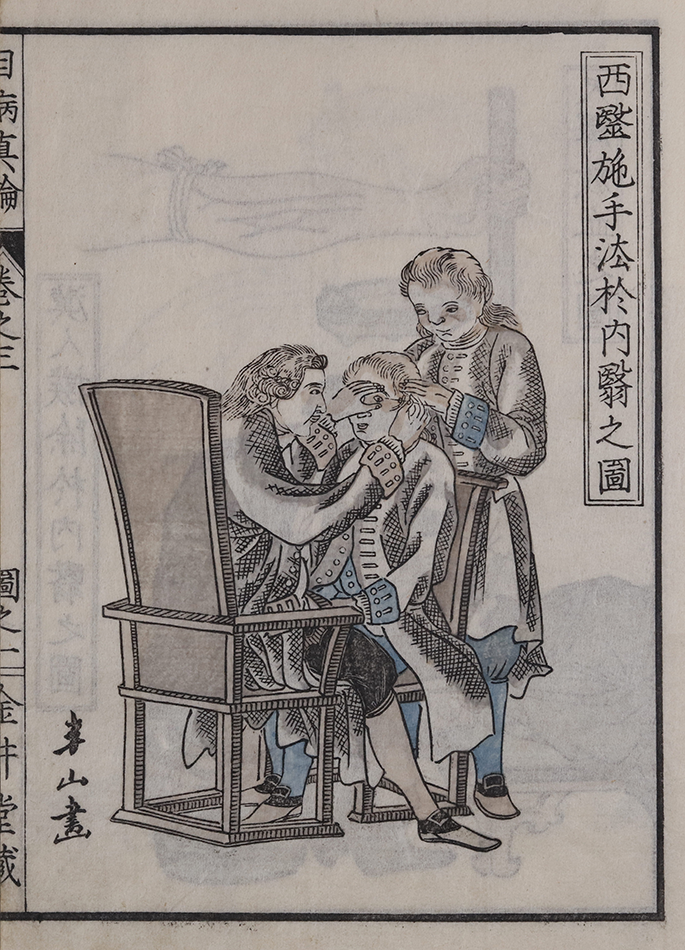
How did an illustration with origins in a 16th century German text make its way to Japan? The answer is trade networks! During Japan’s Edo period, which lasted from 1601 to 1868, the Netherlands was the only Western power to have diplomatic and economic ties with the Japanese government. Japan’s interest in Dutch scientific and medical texts led to the rise of rangaku, or scholarship based on Western learning. Rangaku scholars—Nakanome among them— translated Dutch texts into Japanese and incorporated European scholarship into their own works.
While Heister was German, he had strong ties to the Netherlands. He studied in both Leiden and Amsterdam and served in the Dutch military; moreover, his Chirurgie was translated into all the major European languages, which included Dutch.
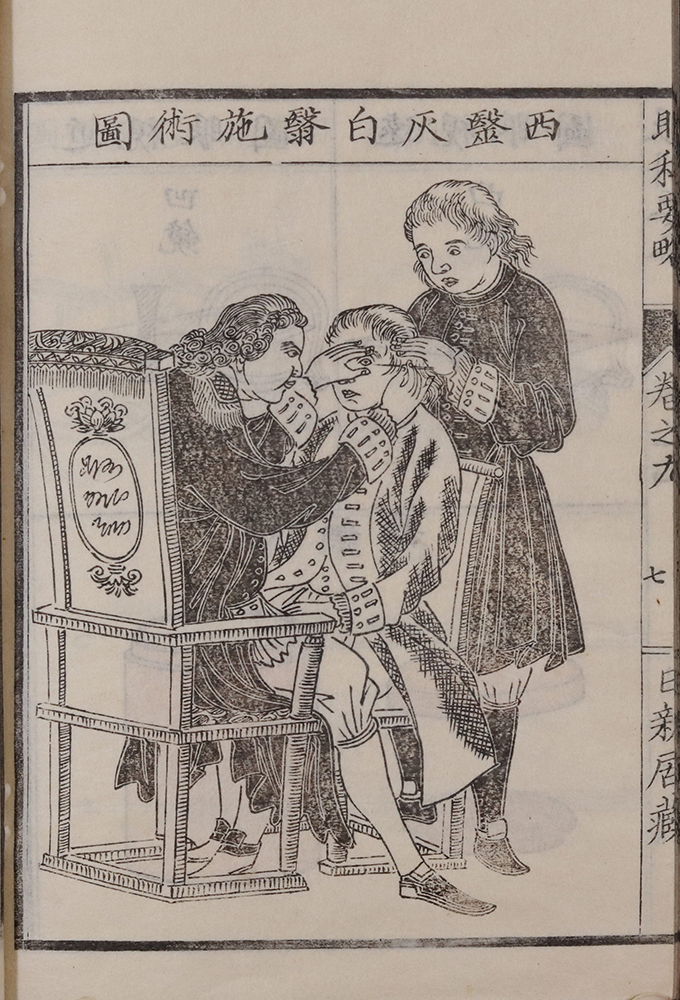
We’ll wrap up with one last iteration, also from Japan. This version comes from Tansai Nakagawa’s Ganka Yoryaku, published in the mid-1860s. Nakagawa practiced medicine in Nagasaki, the locus of international scholarship, and studied at the Dutch medical school located there. This edition of his work on eye diseases includes a number of woodcut illustrations scattered throughout the volumes, including this one that is nearly identical to the one seen in Nakanome’s work.
When Bartisch published his Augendienst in 16th century Germany, he probably never suspected that its afterlife would extend all the way to 19th century Japan. But we like to think he would have been delighted to know that his depiction of cataract surgery crossed oceans and centuries, providing a testament to the enduring power of images.