
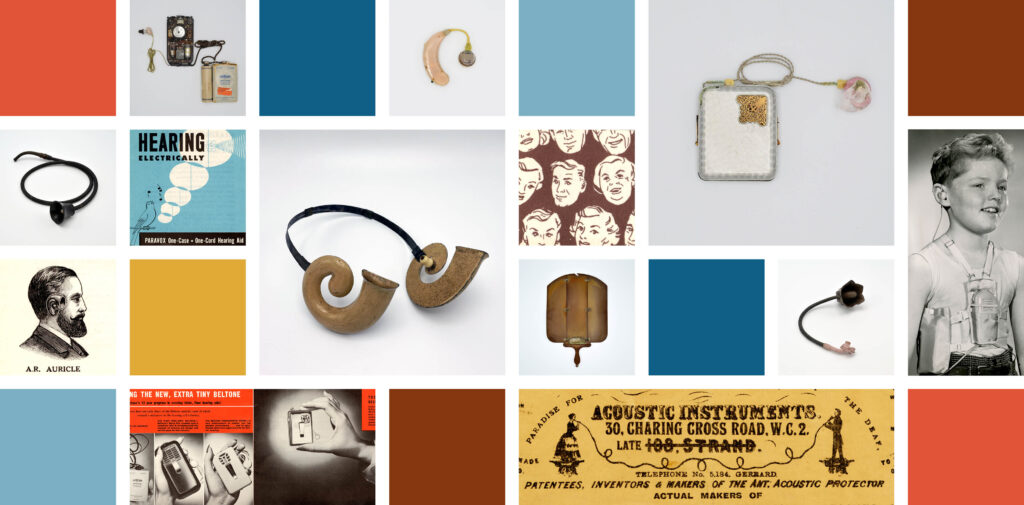
“How Did We Get Hear? Historic Hearing Devices 1800-2000” is a new digital exhibit from the Becker Archives that explores the long history of hearing devices, from mechanical conversation tubes to electronic transistor hearing aids.
The exhibit features nearly 100 different hearing devices from Becker Archives’ Central Institute for the Deaf–Max A. Goldstein Historic Devices for Hearing Collection, as well as dozens of advertisements, photographs, and illustrations found in collections at Becker Archives and Rare Books.
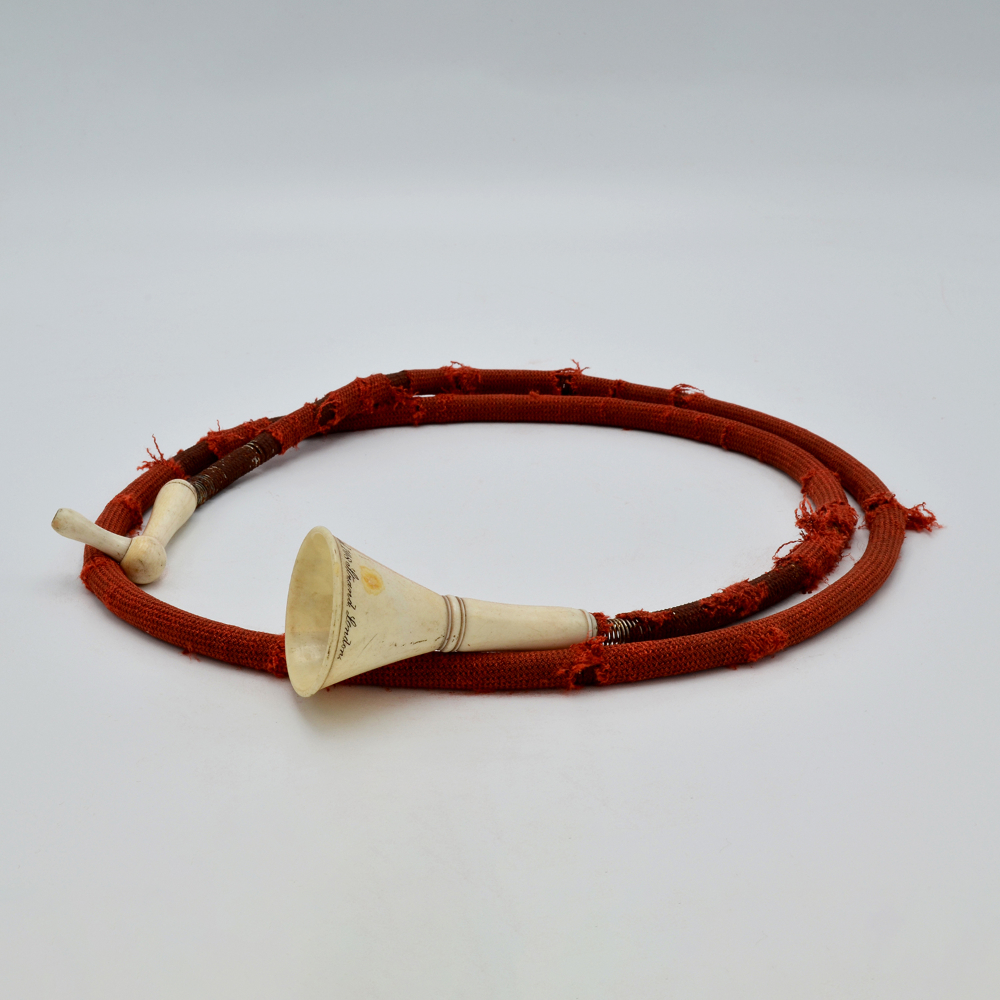
A 57-inch-long conversation tube, circa 1796. The receptor and earpiece are made of ivory, and the tube is rubber covered with red silk fabric.
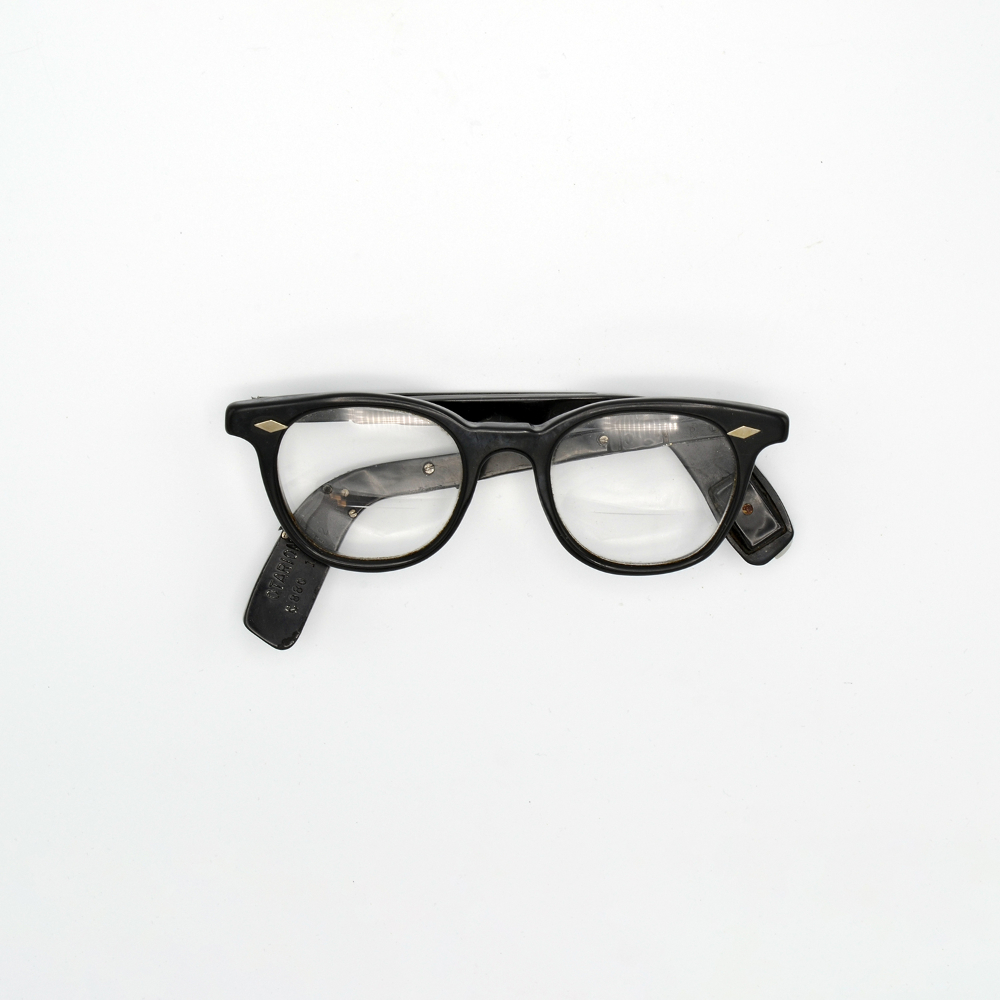
Otarion Electronics’ Model Rx 880, a plastic binuarual eyeglass hearing aid, 1967. This device used transistors, an electronic component invented in the mid-1900s that made the miniaturization of hearing aids possible.
The hearing aids we are familiar with today are both tiny, mighty, and the product of hundreds of years of scientific and technological development. Visit “How Did We Get Hear?” to explore the innovations and inventions that shaped the history of hearing devices, as well as some of the problematic beliefs and biases that influenced their development.
“How Did We Get Hear? Historic Hearing Devices, 1800-2000” is based on an exhibit of the same name that was on display in Bernard Becker Medical Library’s Glaser Gallery from November 2022 to February 2023. To learn about our current exhibit in the Glaser Gallery, visit https://becker.wustl.edu/. To view our other digital exhibits, visit https://beckerexhibits.wustl.edu/.