Scholarly publishing Round-up December 2022
Learn more about SciENcv, how to make your work more openly available, the expansion of the NIH Preprint Pilot, and the Highly Cited Researchers list for 2022.
The event featured three presentations given by members of the WashU and St. Louis community. Each presentation served to help contextualize Frederik Ruysch’s work by looking at the history of anatomy, print engravings, and similar topics.
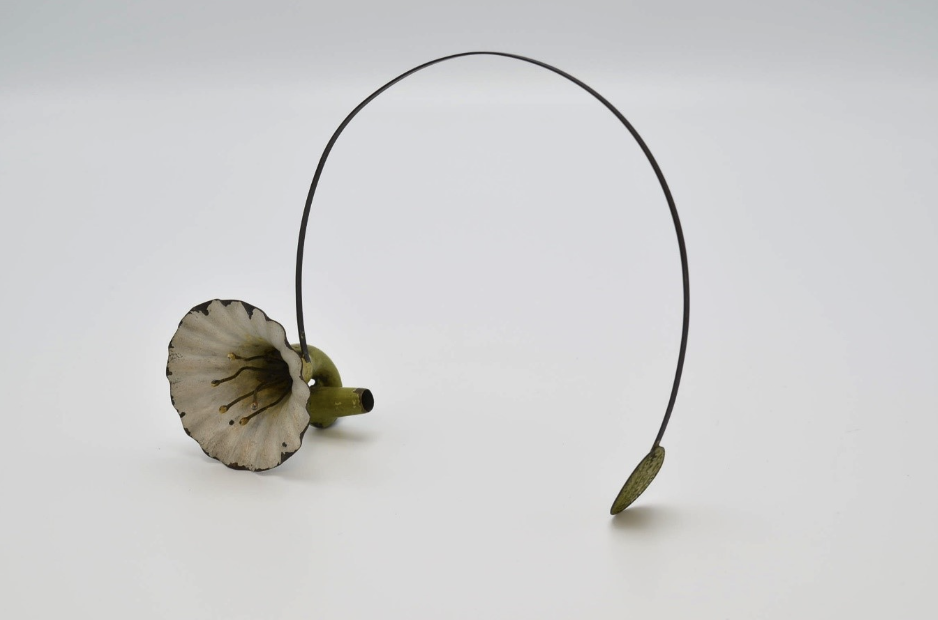
This headband, called an Aurolese Phone, is on display along with more than 60 other hearing devices in a new exhibit at Becker Library called “How did we get hear? Historic hearing devices, 1800-2000.” Compared with the conversation tubes, ear trumpets, and more familiar-looking electronic hearing aids on display in Glaser Gallery, this floral headband seems rather out of place.
This is part 4 of a four-part blog series on FAIR data principles (Part 1: Findable, part2: Accessible, part3: Interoperable, part4: Reusable). We reviewed making data findable in the part 1 blog, accessible in the part 2 blog, and interoperable in the part 3 blog. In this blog, we will discuss how to make data [Read more]
This is part 3 of a four-part blog series on FAIR data principles (Part 1: Findable, part2: Accessible, part3: Interoperable, part4: Reusable). We reviewed making data findable using metadata in the part 1 blog and making data accessible in the part 2 blog. In this blog, we will discuss how to make data interoperable. Part [Read more]
In an effort to improve the quality and efficiency of our MDClone and REDCap consultation services, we began offering virtual office hours earlier in 2022. To further refine and improve this process, you can now schedule 30-minute blocks of time in advance for consultations during office hours! To schedule a consultation, simply: Click the appropriate [Read more]
This is part 2 of a four-part blog series on FAIR data principles (part 1: Findable, part2: Accessible, part3: Interoperable, part4: Reusable). We reviewed making data findable using metadata in part 1, so now we will discuss how to make data accessible. Part 2: Accessible There are three principles: Selecting a suitable data repository with [Read more]
Resource spotlight: Natural Medicines
Cold season is upon us, and 53% of adults report that they take at least one dietary supplement. Access reliable information through an evidence-based resource with reliable information.
Here, we will break down the details of the FAIR data principles in a four-part blog series: Part 1: Findable, Part 2: Accessible, Part 3: Interoperable, Part 4: Reusable. So what are the FAIR data principles, and why are they important? The FAIR data principles emphasize machine-actionability to ensure that computational systems can find, access, [Read more]
Learn more about Open October 2022, the new OSTP memo, editorials authored by School of Medicine authors and more.