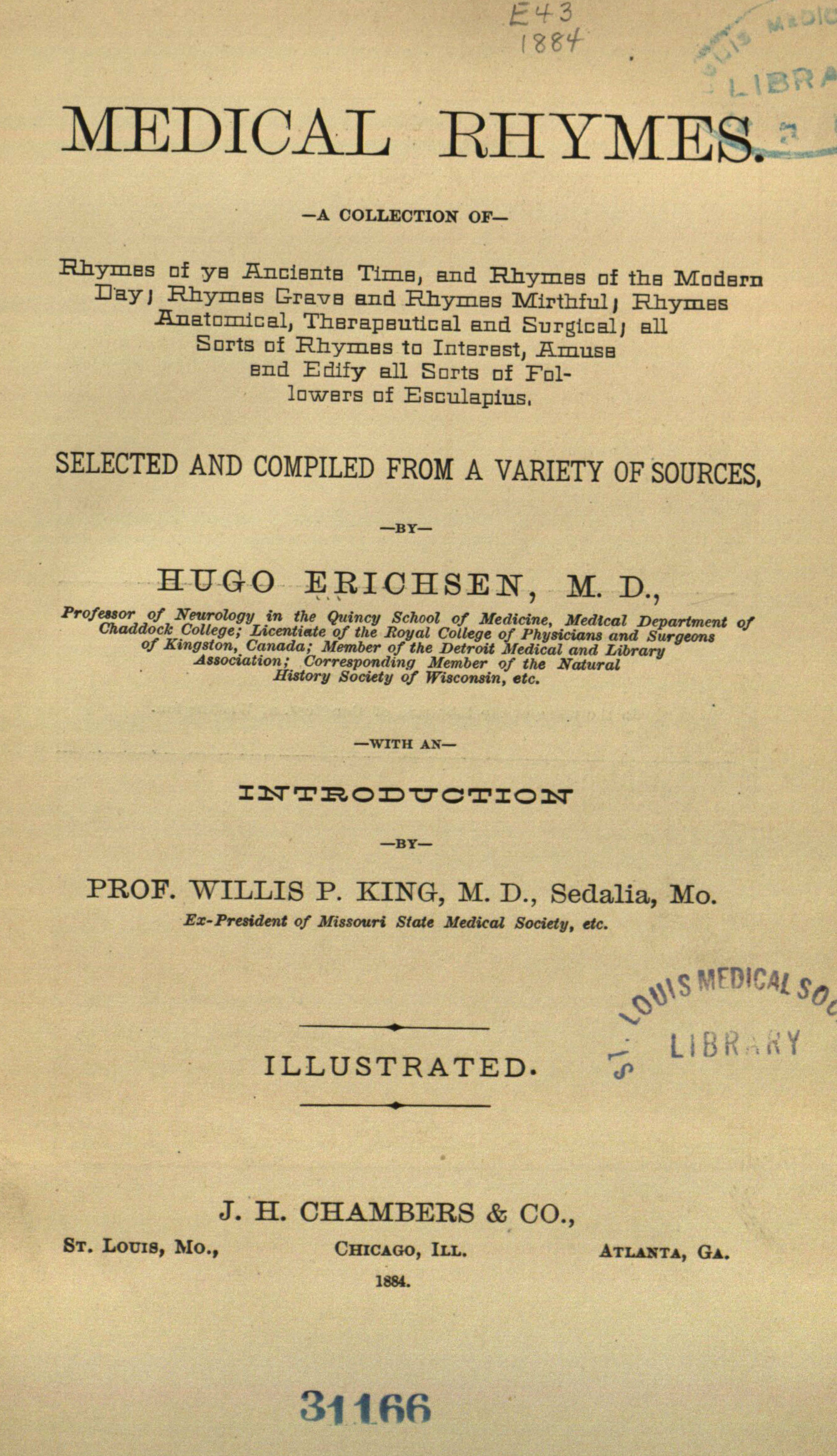
Celebrate National Poetry Month With Medical Rhymes
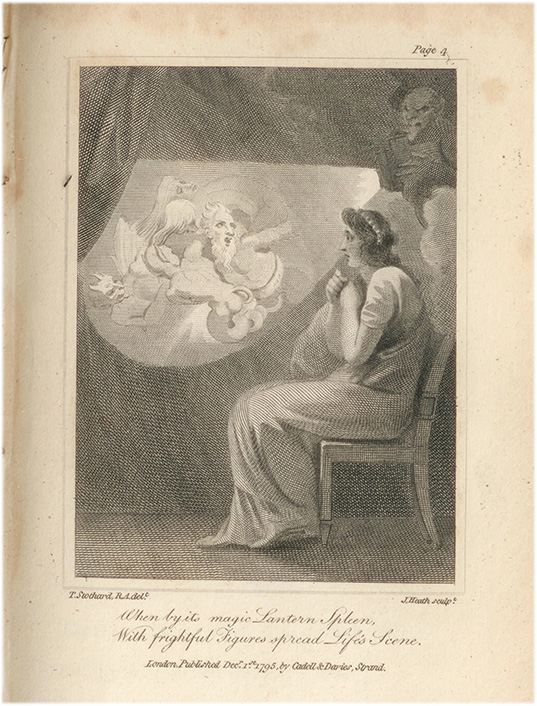
April is National Poetry Month! That means it’s time for us to venture into the stacks and find examples of one of the most entertaining poetic subgenres: Medical Poetry.
Anyone with an interest in medicine, literature or history is invited to take part in Becker Library’s Special Collections Book Club. Every few months, we’ll hold a discussion about a novel that features some aspect of medical history, then look at the primary sources that bring the stories to life.
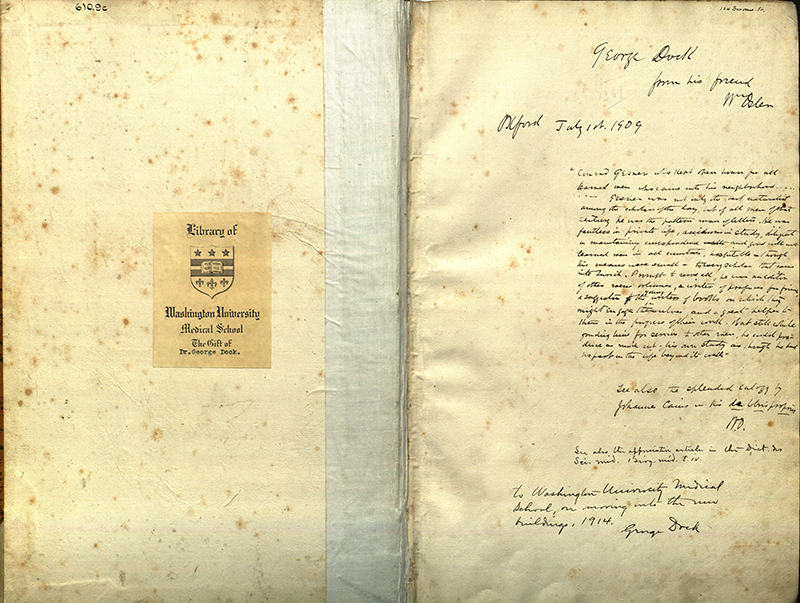
William Osler (1849-1919) is one of the most influential figures in North American medicine. After earning his MD from McGill University in 1872, he spent two years studying abroad in London, Berlin and Vienna before returning to McGill to teach. He remained at McGill until 1884, when he accepted the chair of clinical medicine at [Read more]
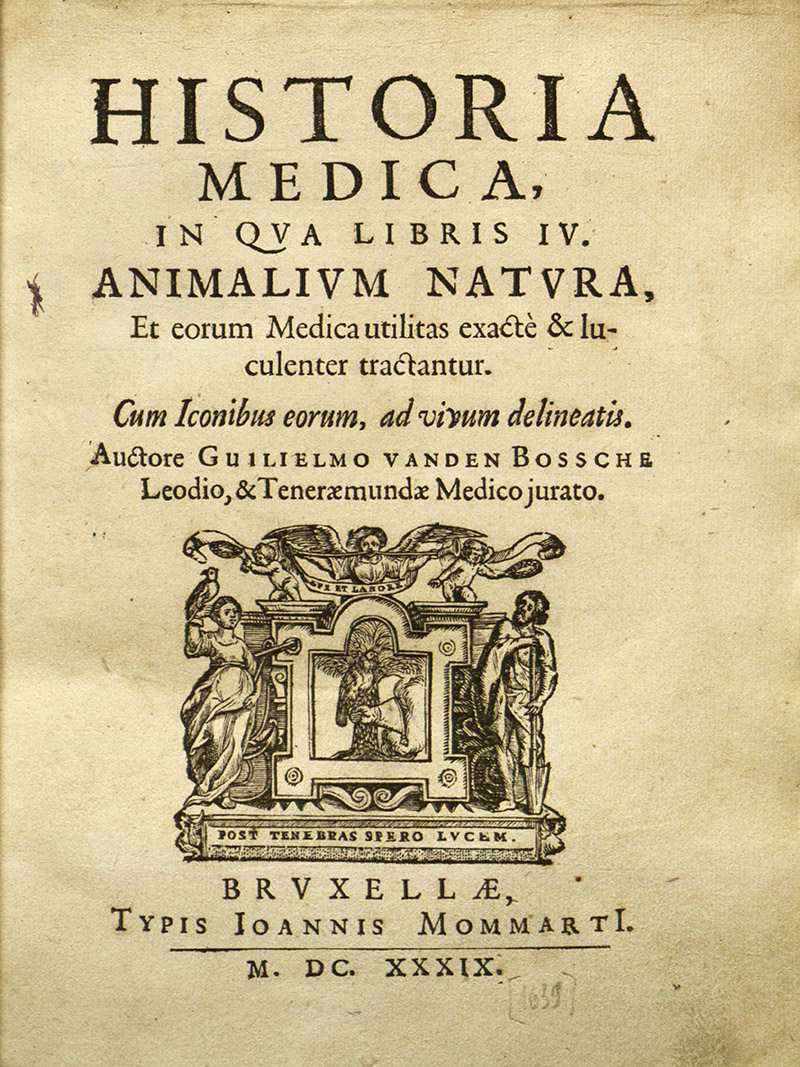
Becker Library’s rare book collections have had an excellent year! Richard Chole, MD, donated his fantastic collection of rare otolaryngology texts earlier this year, and we’ve recently managed to acquire two more noteworthy monographs to complement our existing collections. The first of these monographs is Guillaume van de Bossche’s “Historia medica, in qua libris IV. [Read more]
How many of you take the time to look at a title page when you buy a new book? Most of the time there’s no real need to do so – we can read the book’s title and author right on the front cover. Hundreds of years ago, however, the title page played a much more important role. During the early modern period, when printed books were first becoming popular, books were usually either sold unbound or with simple paper wrappers. Therefore, the title page was responsible for both providing information about a work and luring prospective buyers.
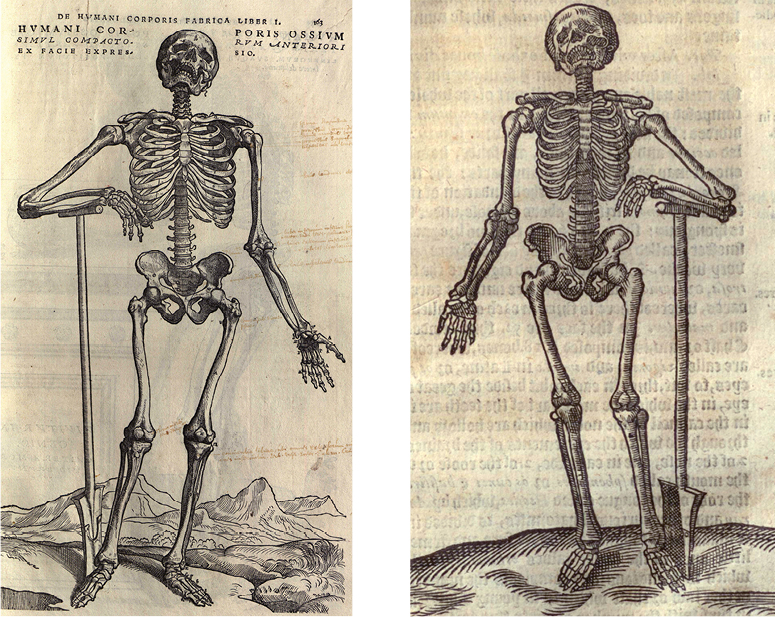
Some of the most famous images in the history of medicine can be found in Andreas Vesalius’s “De humani corporis fabrica,” published in 1543 by Johannes Oporinus. Medical illustration prior to Vesalius tended to be rather crude and schematic, but the woodcuts that appeared in the Fabrica managed to capture an extraordinary amount of detail [Read more]
Medical knowledge has undergone, shall we say, significant changes since the medieval and early modern periods. Humorism – the idea that the bodily health depended on the proper balance of the four humors of blood, phlegm, black bile, and yellow bile – has been thoroughly debunked. We understand germ theory. A broken bone is a [Read more]
April is National Poetry Month and, as in past years, we’re celebrating by showing off an example of poetry that has a medical flavor. Matthew Green’s long poem “The Spleen” is perfect for the occasion. Although Green (1696-1737) was not a literary scholar, he had a keen wit and a certain natural flair for poetry. [Read more]
There are a number of home remedies that claim to cure hangovers. Greasy breakfasts, black coffee, and attempting to sleep it off all come to mind.
If you’re a Harry Potter fan, you’re probably aware that the Potterverse is about to expand with the release of Fantastic Beasts and Where to Find Them. This new film follows the adventures of Newt Scamander, the wizard who authored the textbook Harry and his fellow Hogwarts students used in their Care of Magical Creatures class. While we Muggles (or No-Majs, as we’re called in North America) are unlikely to encounter any hippogriffs, acromantulas, and grindylows in person, if you venture up to Becker’s Archives and Rare Books you can see them in some of our historical texts!